Content Pruning: How to Audit, Merge, and Remove Pages Safely
A practical content pruning audit: how to decide whether to keep, improve, merge, or remove a page, and what Google’s documentation actually says.

Frameworks for creating high-converting digital content strategy, focused on topical authority and scalable publishing models.
A practical content pruning audit: how to decide whether to keep, improve, merge, or remove a page, and what Google’s documentation actually says.

Multi-site portfolio management means running several websites as one system rather than as separate projects: one keyword map, shared workflows, one place to watch site health, and clear rules for what each site is for. Done well, it lets a small team keep every site healthy without multiplying the admin. Done badly, it produces sites … Read more

What to publish at each stage of a B2B content funnel, how to measure it, and why most of the buying happens before a prospect ever talks to you.

What information gain really means, what Google’s patent and helpful content guidance do and don’t say, and a practical way to add original value to your pages.

A content monetization path is the planned sequence that takes a reader from your free content to a paid product or service. It usually runs in four steps: free content that answers real questions, a way to capture interest such as an email list, a low-cost entry offer, and a core product. Designing that sequence … Read more
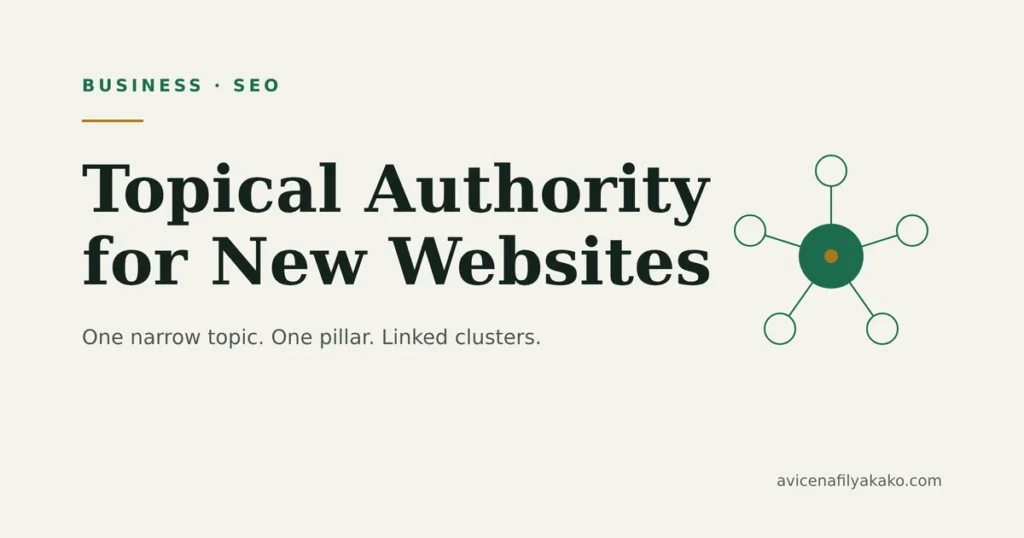
Topical authority for a new website comes from covering one narrow subject completely, not from publishing on everything. Pick a topic you can exhaust, build one pillar page and a set of cluster articles around it, and link them so readers and search engines can see how each page fits. You can start this before … Read more

How founders can build a ghostwriting system that keeps their voice: idea capture, a style guide, a clear review step, and responsible use of AI.

To prioritize keywords by revenue, rank them by how close the searcher is to buying, not by how many people search. Revenue First keyword research scores each term on three signals: buying intent in the query, what advertisers are willing to bid for it, and whether similar pages on your site already convert. Traffic is … Read more

An MVP content strategy is the smallest set of content, usually one landing page, a few ads or posts, and a sign-up form, that you publish to test whether people want a product before you build it. Building a product is expensive; building the wrong product is a catastrophe. The Lean Startup methodology exists to … Read more

Content inventory valuation is the process of estimating what a website’s library of articles and pages is worth, using three lenses: what it would cost to replace, what its organic traffic would cost to buy through ads, and what profit it reliably earns. Most owners book content as a marketing expense. A valuation shows which … Read more