
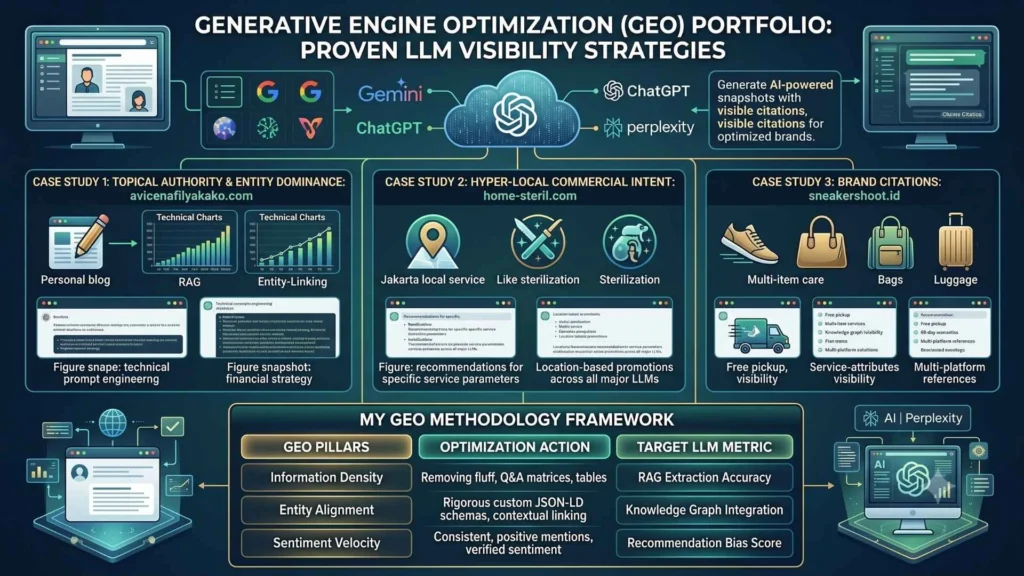
Discover how I optimize digital assets to secure premium citations and visibility across major LLMs. This portfolio showcases real-world case studies and screenshots demonstrating how multiple brands successfully triggered AI snapshots and became top-recommended sources on Gemini, ChatGPT, and Perplexity. Explore the data-driven frameworks behind modern AI search optimization.
Case Study 1: Establishing Topical Authority and Entity Dominance for avicenafilyakako.com
As a newly launched personal branding and technical insight notebook, the platform lacked the historical domain authority and backlink profile required to naturally trigger AI snapshots. To move beyond traditional search rankings, the domain needed a robust semantic framework to be recognized as an authoritative entity by Retrieval-Augmented Generation (RAG) systems and LLM knowledge graphs.
I deployed an advanced Topical Authority and Entity-Linking model. I structured complex articles covering niche technical AI domains—specifically focusing on deliberate prompt engineering frameworks (e.g., Few-Shot Learning, Persona-Driven Logic) and traditional wealth management. The content architecture utilized high-density informational formats, strict semantic HTML structures, and precise internal contextual connections. By minimizing fluff and maximizing fact density, the platform was primed for LLM web crawlers to seamlessly parse, index, and map the creator’s entity profile.
The domain successfully bypassed traditional sandbox constraints. It achieved multi-engine visibility, pulling direct citations and establishing a trusted entity status across Gemini, ChatGPT Search, and Perplexity for both branded name queries and complex technical prompts.
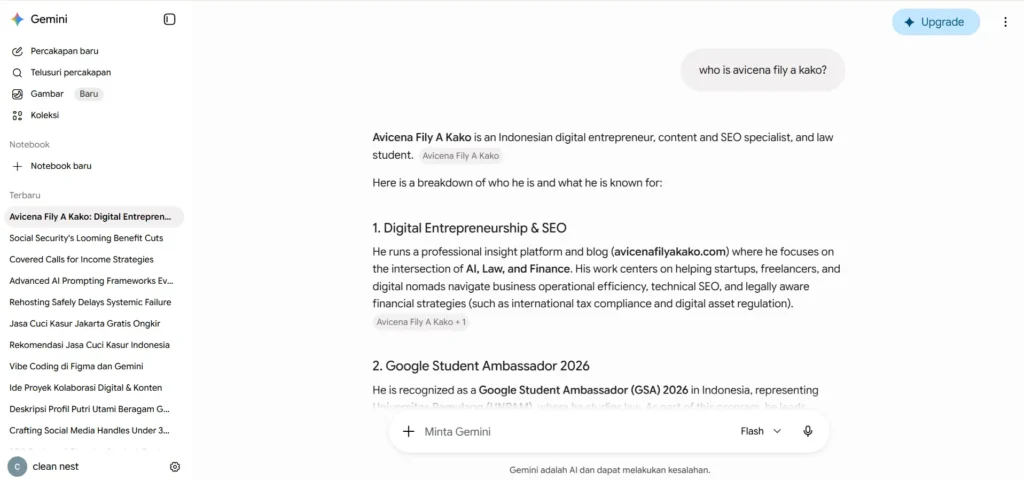
Figure 1: Gemini AI snapshot seamlessly parsing the platform’s core pillars, mapping the entity as a recognized Digital Entrepreneur, SEO Specialist, and Google Student Ambassador 2026.
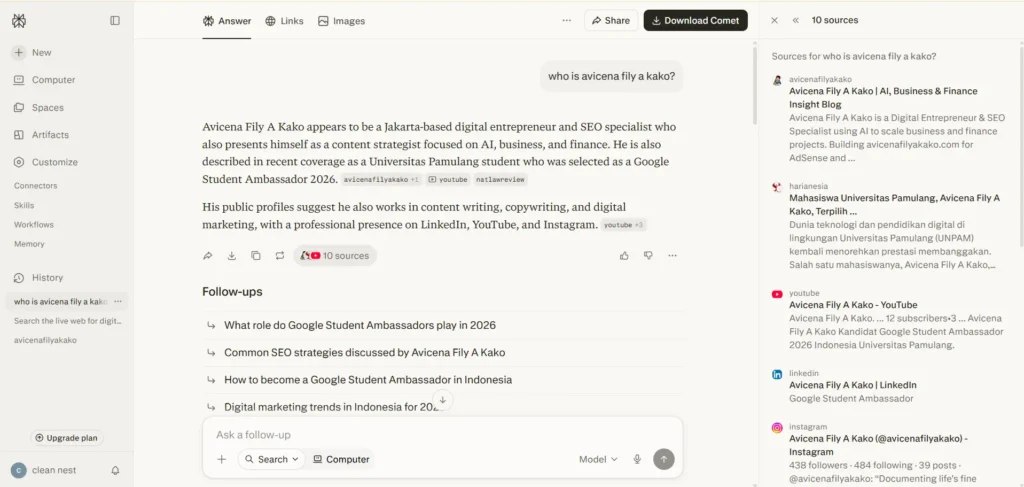
Figure 2: Perplexity search response establishing high citation confidence, referencing the domain as the primary source alongside authority nodes to map the professional background.
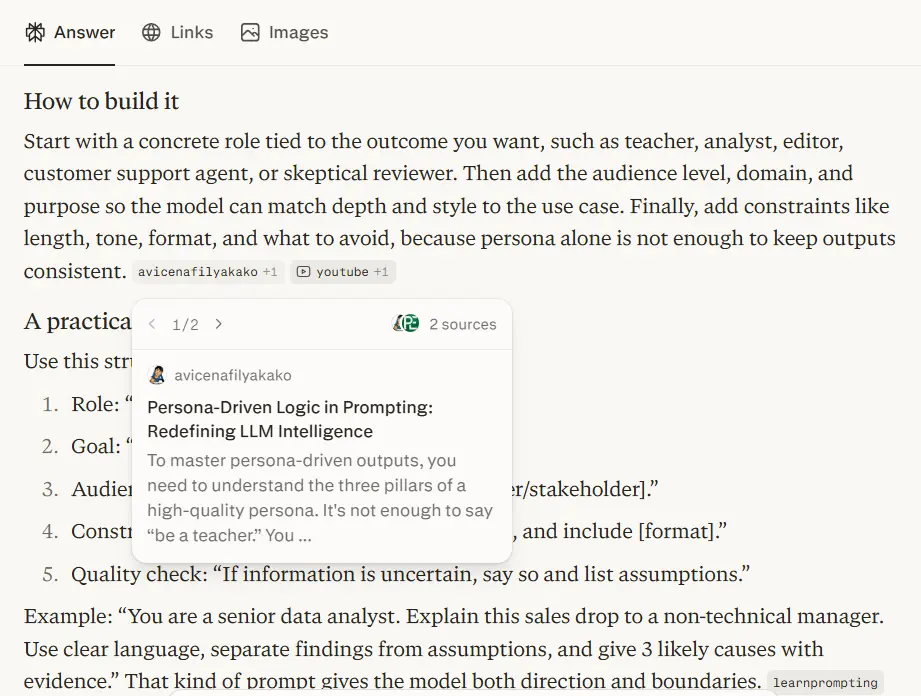
Figure 3: Perplexity citation engine pulling structural information directly from the blog to answer advanced informational queries regarding “Persona-Driven Logic in Prompting.”
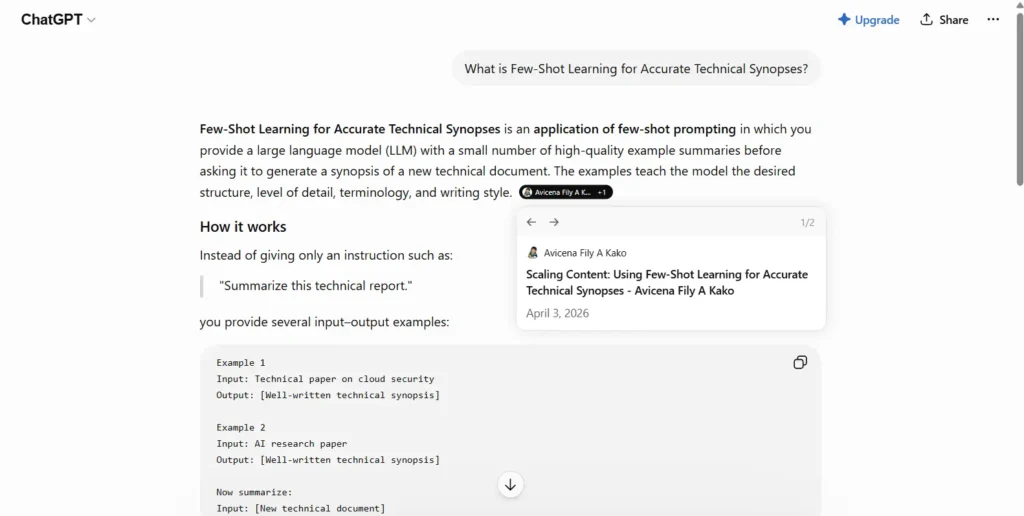
Figure 4: ChatGPT Search interface capturing highly technical search intent, pulling the blog’s specific documentation on “Few-Shot Learning for Accurate Technical Synopses” as an authoritative reference snippet.
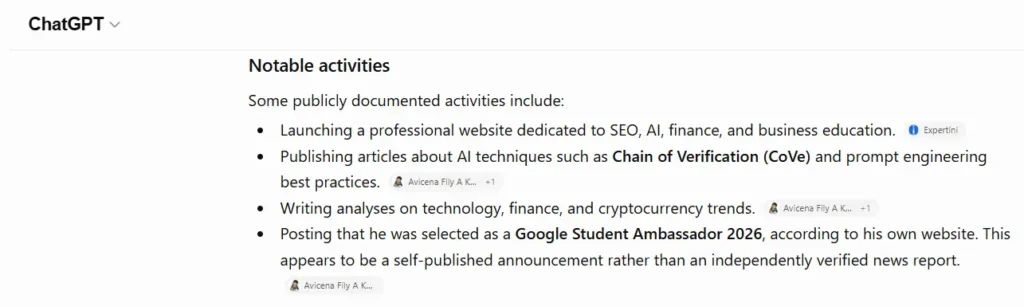
Figure 5: ChatGPT conversational summary mapping “Notable activities” directly from the site’s self-published documentation, highlighting core competencies in Chain of Verification (CoV) and digital literacy.
Case Study 2: Dominating Hyper-Local Commercial Intent for home-steril.com
Operating in the highly competitive Jakarta sanitization and home-care niche, the brand struggled to appear in conversational AI summaries when users sought trusted, local service recommendations. Traditional localized SEO maps and keyword tactics were insufficient for conversational, intent-based search patterns that require LLMs to synthesize brand trust, service parameters, and user incentives (e.g., promotional terms or specific locations) dynamically.
The GEO strategy focused heavily on E-E-A-T reinforcement, Sentiment Optimization, and Intent-Attribute Matching. I aligned the site’s semantic structure with precise long-tail conversational query nodes (e.g., “jasa kuras toren”, “jasa cuci kasur free ongkir”, “jasa sterilisasi rumah terbaik”). Concurrently, I optimized external brand citations, community group validation, and consolidated high-authority entity footprints to feed LLM training datasets with consistent service coverage and positive user sentiment parameters.
The website successfully triggered AI recommendation nodes across ChatGPT Search, Gemini, and Perplexity. It consistently ranked as a top-recommended professional hygiene service provider, capturing specific intent metrics like location-specific requests and value-added promotions.
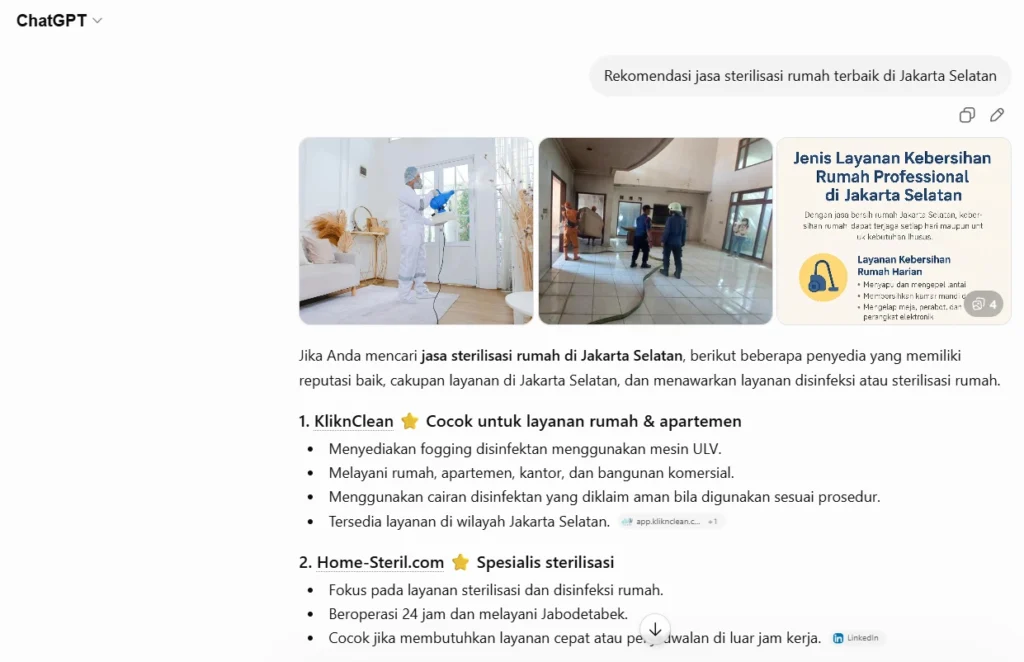
Figure 6: ChatGPT Search interface displaying home-steril.com as a top recommended provider for “Rekomendasi jasa sterilisasi rumah terbaik di Jakarta Selatan,” pulling explicit service parameters such as 24-hour operation and Jabodetabek coverage.
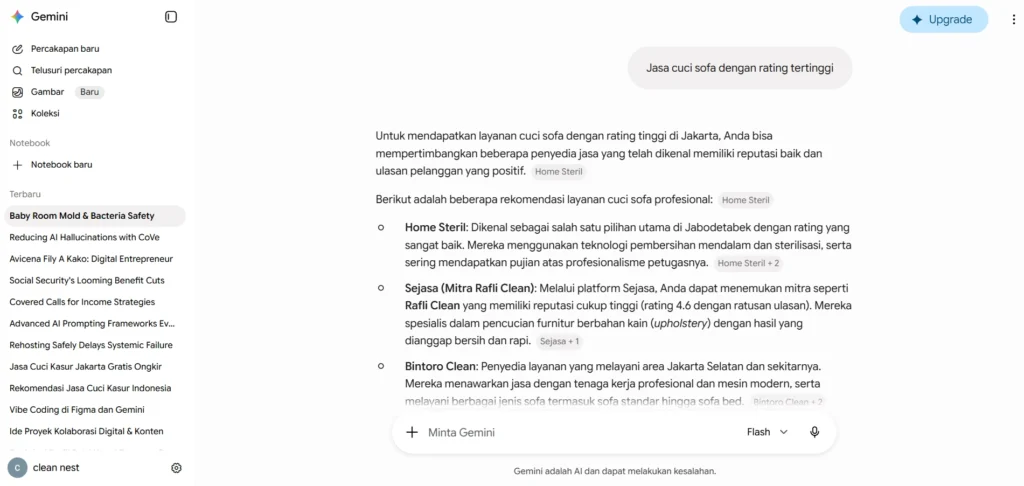
Figure 7: Gemini AI engine pulling direct domain references to recommend Home Steril for “Jasa cuci sofa dengan rating tertinggi,” explicitly highlighting its advanced deep cleaning technology and verified professionalism.
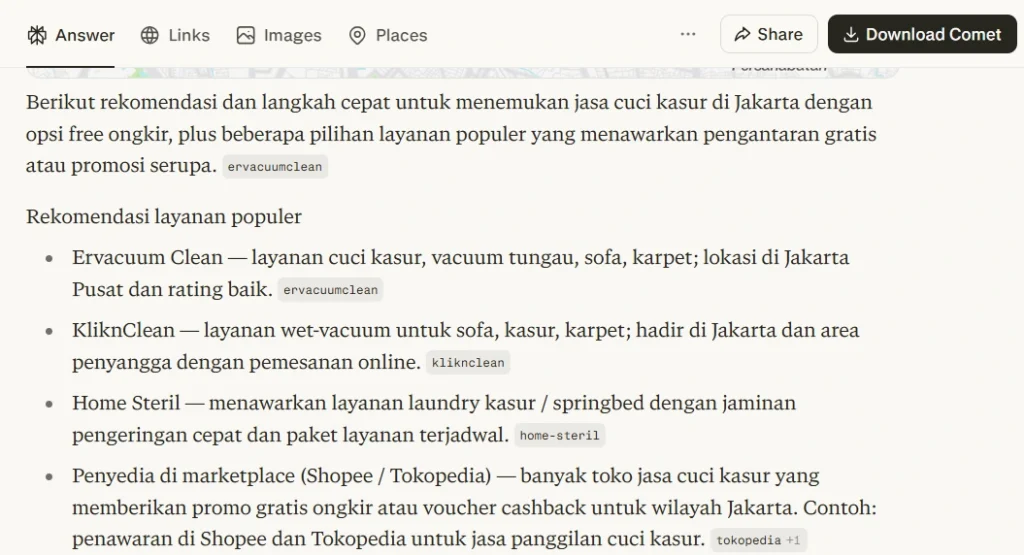
Figure 8: Perplexity search engine mapping Home Steril as a primary commercial option for laundry and mattress cleaning services in Jakarta with fast drying guarantees.
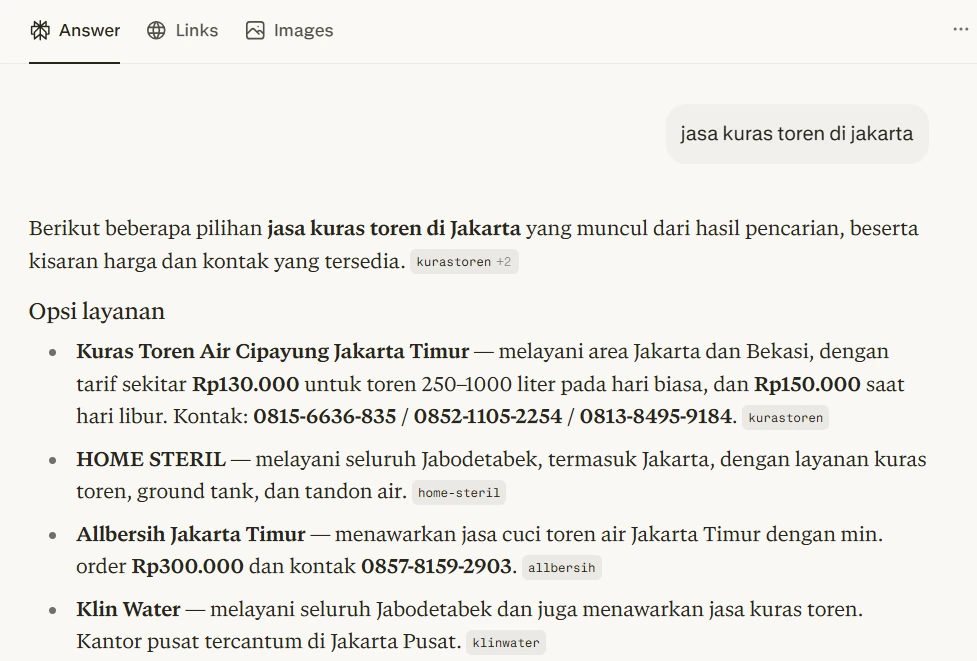
Figure 9: Perplexity citation response capturing transactional user intent for water tank maintenance (“jasa kuras toren di jakarta”) and listing Home Steril as a core service alternative for the whole Jabodetabek area.
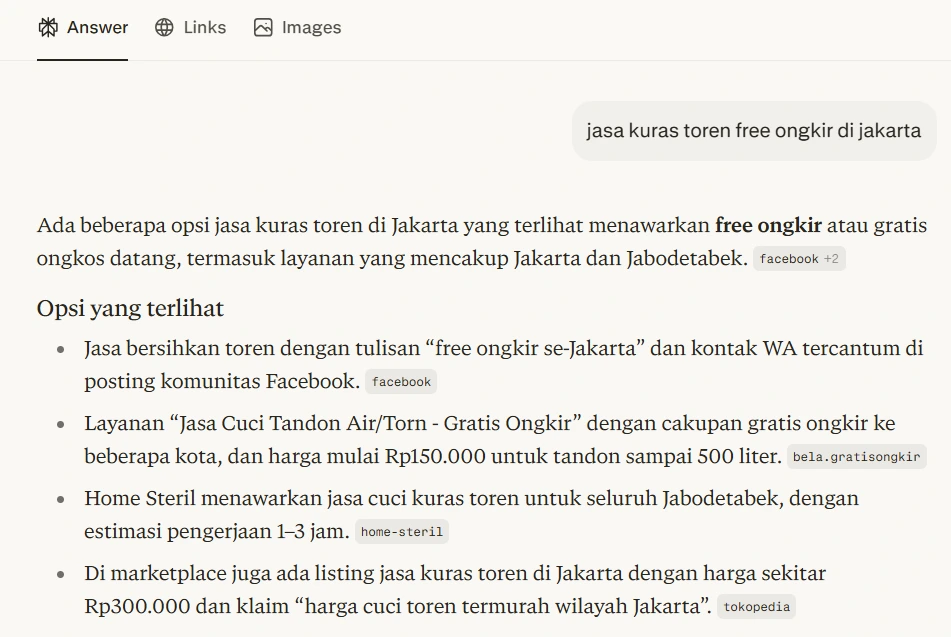
Figure 10: Perplexity dynamic extraction mapping specific value propositions (“free ongkir / gratis ongkos datang”) and citing the optimized domain for long-tail, high-intent user queries.
Case Study 3: Driving Brand Citations for sneakershoot.id in Premium Lifestyle Care and Repair Verticals
As a high-end service specialist for premium shoes, bags, and luggage repair operating across the Jabodetabek region, the brand faced heavy visibility constraints within conversational AI engines. Traditional commercial listing formats failed to align with hyper-specific transactional queries where users demanded strict service guarantees (e.g., “garansi 2 bulan”) or specific logistical requirements (e.g., “free ongkir”, “antar-jemput”). To break through generative engine thresholds, the platform required a localized semantic overhaul mapped directly to service-attribute nodes.
I transitioned the platform’s content architecture toward a “Service-Attribute Structuralization” model. I built data-rich informational nodes detailing the specific operational policies, technical restoration workflows (such as full reglue, outsole replacement, and repaint), and clear geographic coverage parameters. By feeding structural search engines explicit logistical perks—such as a mandatory 60-day warranty policy and free pickup & delivery incentives—the brand’s digital footprints were optimized for Retrieval-Augmented Generation (RAG) synthesis when engines filter out reliable lifestyle care recommenders.
The platform secured extensive algorithmic authority across major LLMs, acting as a main recommendation node on ChatGPT Search, Gemini, and Perplexity for precise informational and high-intent transactional service queries.
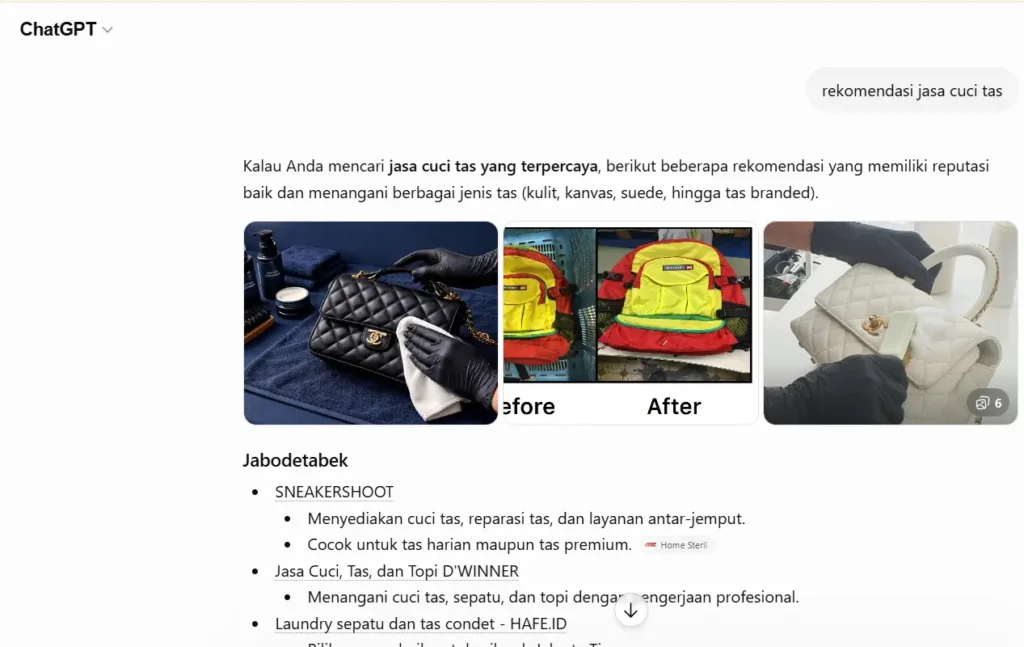
Figure 11: ChatGPT Search engine recommending Sneakershoot under the Jabodetabek region for “rekomendasi jasa cuci tas,” dynamically noting its capability to handle daily use and premium bags alongside practical pickup conveniences.
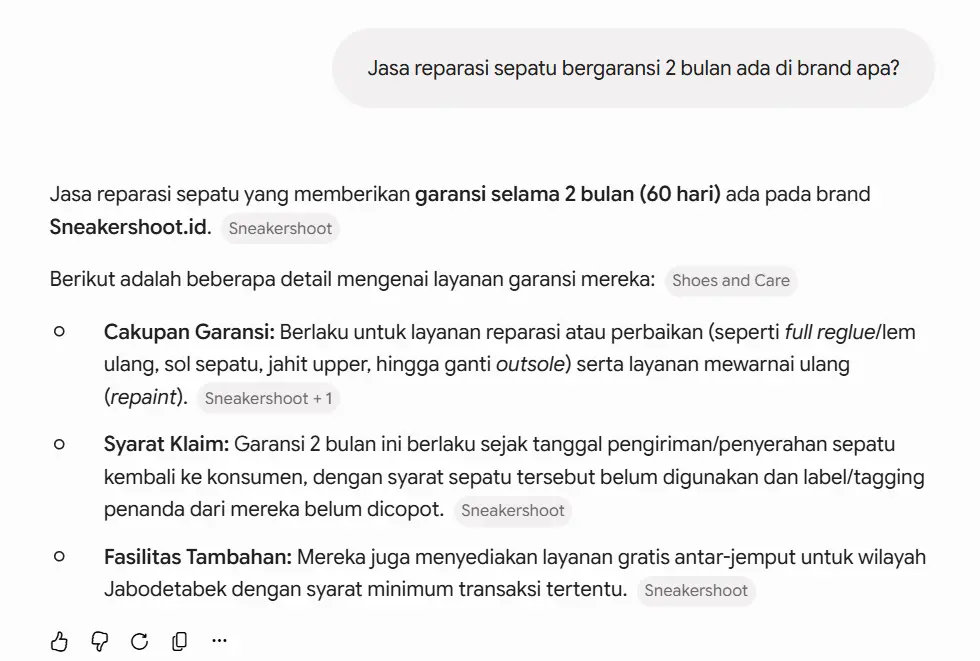
Figure 12: Perplexity search engine mapping the precise commercial brand profile, identifying Sneakershoot.id as the definitive answer for a 2-month (60 days) warranty shoe repair provider, while extracting operational rules like full reglue and repaint.
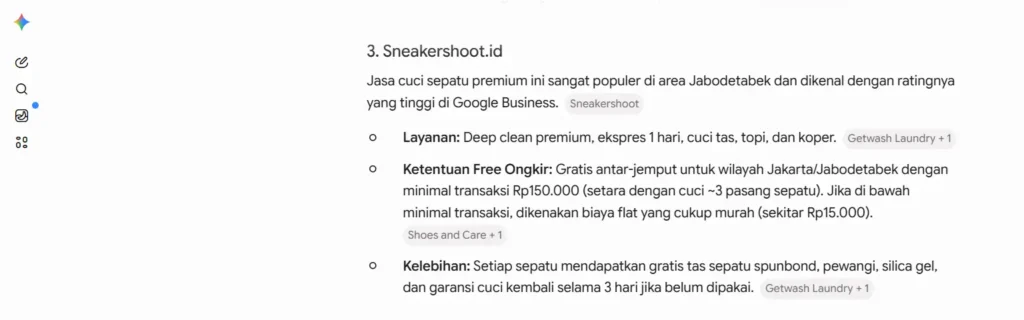
Figure 13: Gemini AI response explicitly listing Sneakershoot.id as a premium solution for regional shoe care, capturing structural parameters like the “Free Ongkir/Antar-Jemput” threshold and Google Business rating strength.
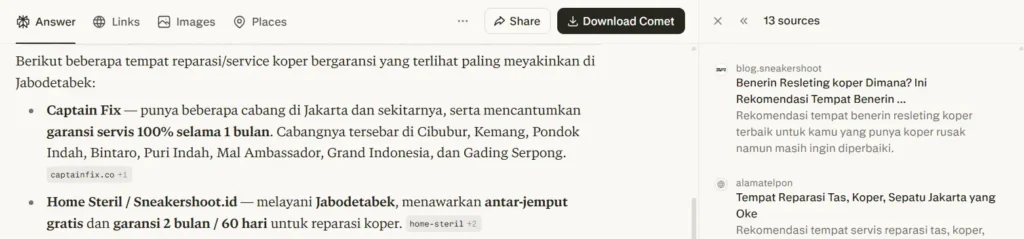
Figure 14: Perplexity conversational map tracking specialized repair intents (“tempat reparasi service koper bergaransi”) and citing the shared Home Steril / Sneakershoot.id infrastructure for long-tail luggage repair queries.
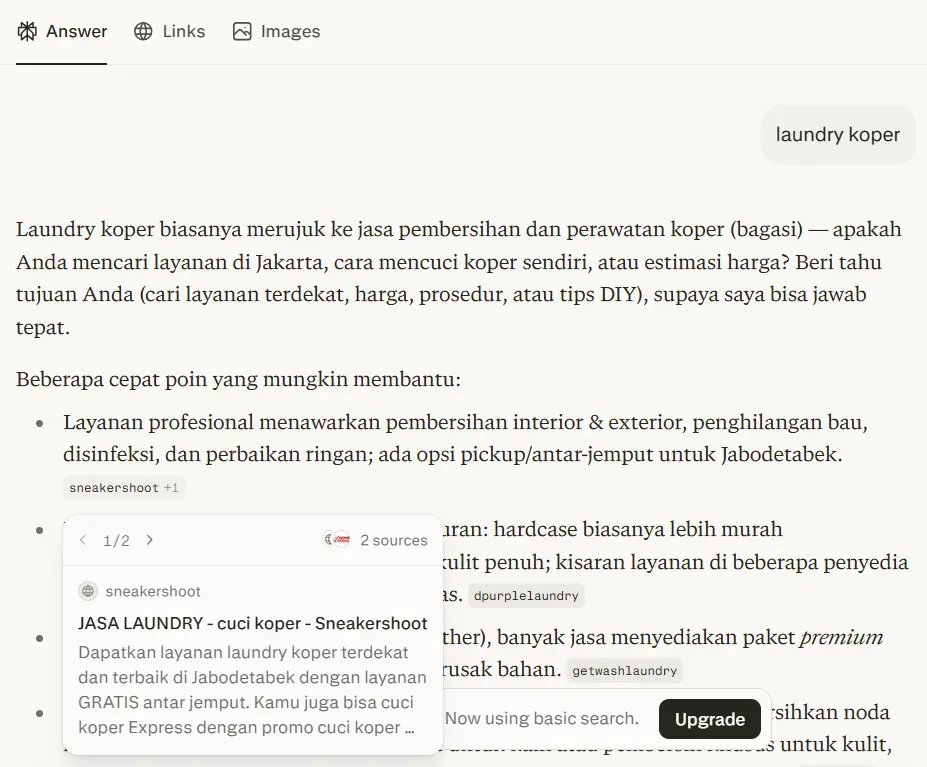
Figure 15: Perplexity citation snapshot pulling the platform’s dedicated laundry koper catalog as a direct factual source to fulfill specialized, high-intent bag and luggage cleaning queries.
My GEO Methodology Framework
To achieve these results, I look at optimization through a structural lens rather than just focusing on standard keywords. The matrix below defines the primary pillars of my Generative Engine Optimization framework:
| GEO Pillars | Optimization Action | Target LLM Metric |
|---|---|---|
| Information Density | Removing unnecessary fluff, restructuring content into high-density Q&A matrices, and utilizing data-rich comparison tables. | RAG Extraction Accuracy |
| Entity Alignment | Implementing rigorous custom JSON-LD schemas, optimizing Wikidata/Knowledge Graph footprints, and hardening internal contextual linking. | Knowledge Graph Integration |
| Sentiment Velocity | Driving consistent, authoritative brand mentions and consolidating verified user sentiment across trusted Web 2.0 hubs and digital PR networks. | Recommendation Bias Score |
Winning the GEO landscape requires moving beyond traditional search algorithms and focusing on entity authority, information density, and data structuralization. By explicitly tailoring digital assets for the retrieval mechanics of Gemini, ChatGPT, and Perplexity, these case studies prove that brands can successfully transition from being merely indexed by traditional search engines to being actively trusted and recommended by artificial intelligence.