
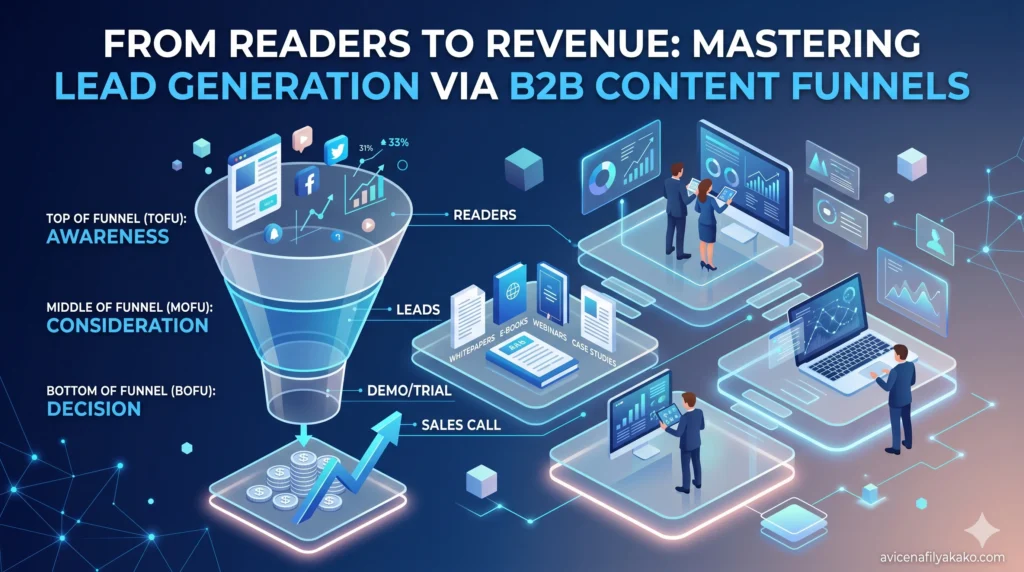
Scaling a business in the enterprise space isn’t about casting a wide net; it’s about building a sophisticated filter. I’ve seen many marketers treat lead generation like a numbers game, but in the B2B world, it’s a game of relevance and relationship building.
To succeed, you need a content funnel that does more than just inform. It must guide a prospect from “Who are you?” to “How do I sign up?” while establishing your brand as a trusted authority. Let’s break down how to build a high-converting B2B marketing strategy that turns readers into long-term partners.
Understanding the B2B Marketing Funnel
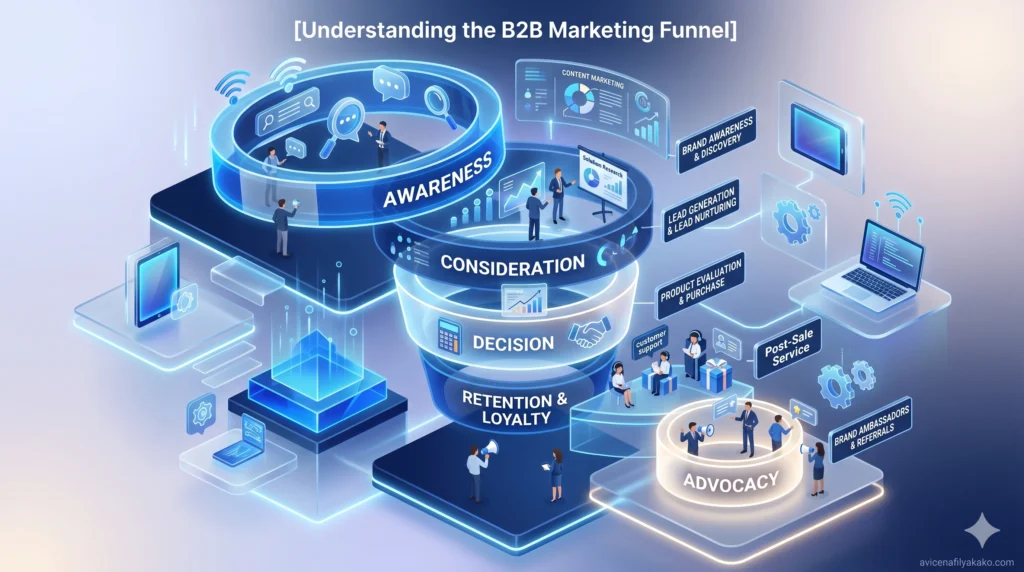
A B2B funnel is often longer and more complex than a B2C one because the stakes are higher and more stakeholders are involved. Think of it like a professional courtship. You wouldn’t propose on the first date; similarly, you shouldn’t ask for a sale in your first blog post.
The Three Pillars of Demand Generation Marketing
- Awareness (TOFU): Capturing interest through educational content.
- Consideration (MOFU): Providing solutions and demonstrating expertise.
- Decision (BOFU): Proving ROI and closing the deal.
As Seth Godin famously said:
“Permission marketing is the privilege (not the right) of delivering anticipated, personal and relevant messages to people who actually want to get them.”
Step 1: Attracting B2B Leads at the Top of the Funnel (TOFU)

At this stage, your goal is pure lead generation through education. Your audience isn’t looking for a product yet; they are looking for a solution to a problem or an answer to a question.
To ensure your top-of-funnel efforts aren’t wasted, you should utilize an MVP content mapping framework to align every piece of educational material with specific user needs.
Partnership SEO and Topical Authority
I recommend focusing on Partnership SEO. This involves creating content that aligns with the interests of both your brand and your industry partners. By targeting semantic keywords like “b2b marketing strategy,” you position yourself as a thought leader.
- Educational Blogs: Focus on “How-to” guides and industry trends.
- Infographics: Simplify complex data into digestible visuals.
- Social Proof: Share snippets of success stories on LinkedIn to build initial trust.
Step 2: Nurturing Interest in the Middle of the Funnel (MOFU)
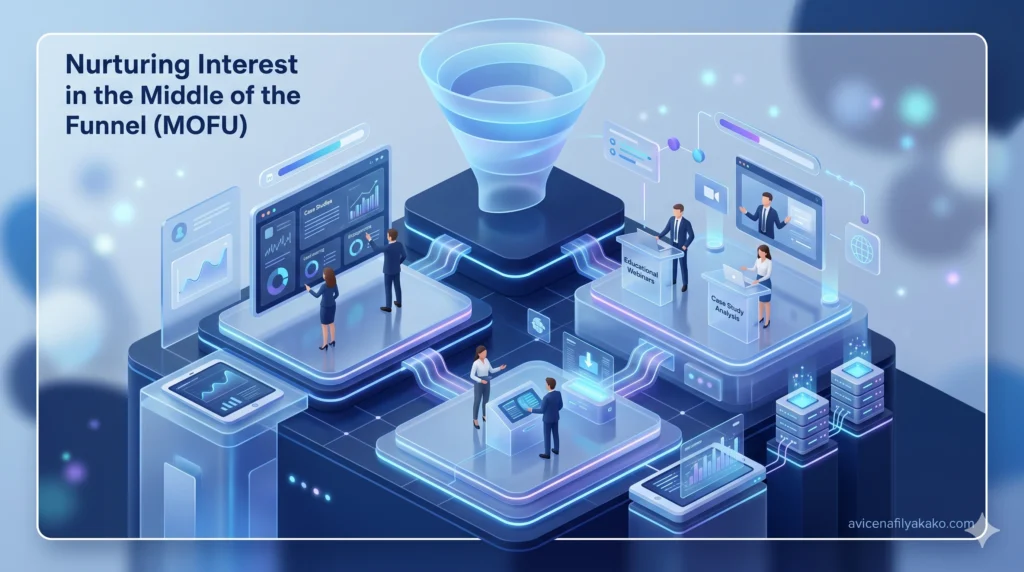
Once you have their attention, you need to prove you are the right fit. This is where demand generation marketing shifts from “problem awareness” to “solution comparison.”
Establishing this level of authority often requires implementing brand scalability and ghostwriting systems that allow founders to maintain a consistent expert voice across all professional channels.
You are no longer just a voice in the crowd; you are a consultant. This stage is crucial for lead generation because it filters out casual browsers from serious prospects.
High-Value Content Assets
- Whitepapers and E-books: Deep dives into technical subjects.
- Webinars: Interactive sessions that allow for real-time Q&A.
- Case Studies: Real-world examples of how you solved a specific pain point.
According to Vereigen Media, leveraging a structured funnel significantly increases the quality of leads passed to sales teams.
Step 3: Closing the Deal at the Bottom of the Funnel (BOFU)
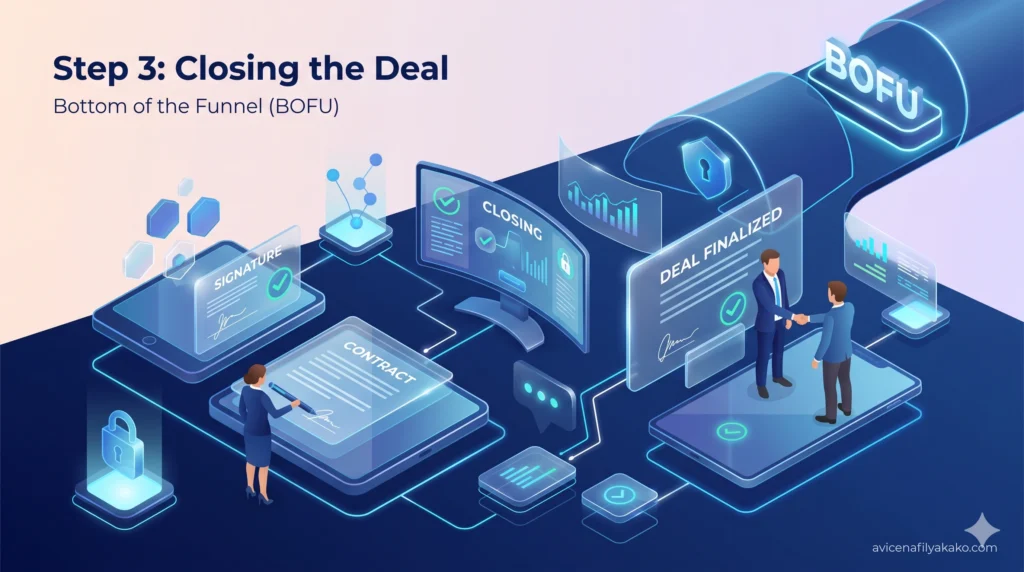
The bottom of the funnel is where the conversion happens. Your B2B leads are now ready to buy, but they need that final nudge—the evidence that choosing you is a safe and profitable decision.
Ultimately, the goal is to create a seamless content-to-product monetization path where your high-intent resources naturally lead the prospect toward your core offering.
Comparison Table: Content vs. Intent
| Funnel Stage | Primary Content Goal | Conversion Metric |
| TOFU | Build Brand Awareness | Traffic & Social Shares |
| MOFU | Educate & Evaluate | Email Sign-ups / MQLs |
| BOFU | Prove ROI & Close | Sales Meetings / SQLs |
To maximize lead generation efficiency here, use direct comparisons, ROI calculators, and personalized demos. You want to remove every ounce of friction from the buying process.
Essential Tactics for a Robust B2B Marketing Strategy
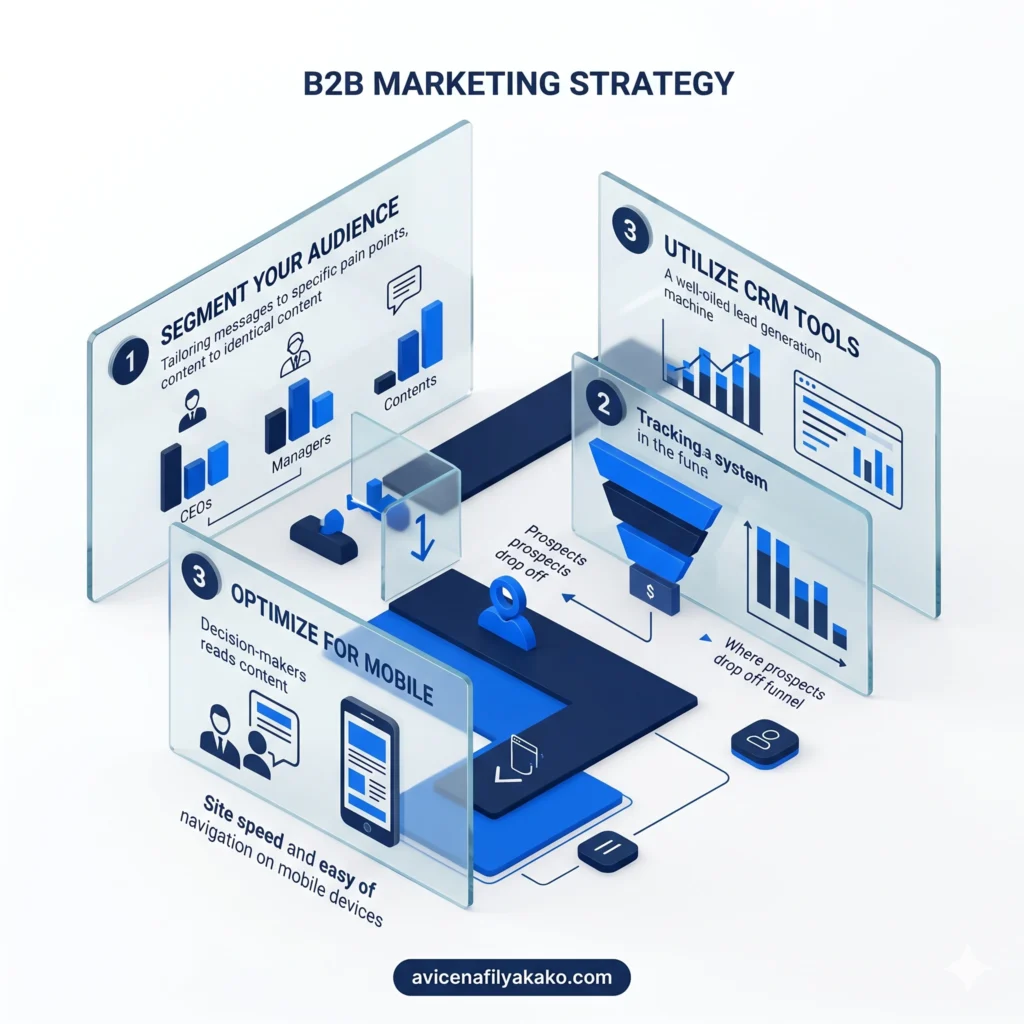
To keep your funnel flowing, you must integrate these core tactics:
- Segment Your Audience: Don’t send the same email to a CEO and a Manager. Tailor the message to their specific pain points.
- Utilize CRM Tools: A well-oiled lead generation machine requires tracking. Use tools to see where prospects drop off.
- Optimize for Mobile: Decision-makers read your content on the go. Ensure your site is fast and easy to navigate on a smartphone.
As highlighted by Monday.com, a CRM-integrated funnel ensures no lead falls through the cracks during the handoff from marketing to sales.
Overcoming Common Funnel Friction
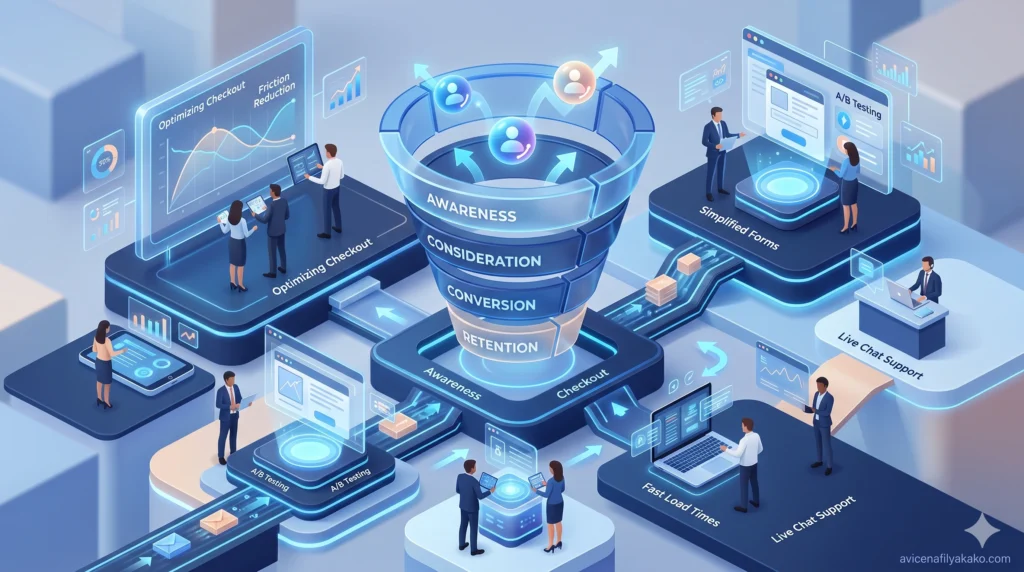
Many businesses fail because their funnel has “leaks.” This usually happens when the transition between stages feels disjointed. If your TOFU content is lighthearted but your MOFU content is overly academic, you’ll lose the reader’s trust.
Think of your content as a bridge. If one plank is missing, the traveler stops. Ensure your lead generation efforts are supported by a consistent brand voice and logical progression of information.
FAQ: Mastering B2B Lead Generation
What is the most effective content for B2B lead generation?
Case studies and research reports are the most effective because they provide empirical evidence of your expertise. These “proof of concept” assets help stakeholders justify a purchase to their internal boards.
How do I measure the success of my B2B marketing funnel?
You measure success by tracking the conversion rate between funnel stages, specifically moving from Marketing Qualified Leads (MQLs) to Sales Qualified Leads (SQLs). While traffic matters, the ultimate KPI is the cost per acquisition (CPA) and the lifetime value of the customer.
Why is demand generation marketing different from lead generation?
Demand generation is the process of creating interest and awareness in your category, while lead generation is the specific act of collecting contact information from interested prospects. You need demand generation to fill the top of your funnel so that you have people to convert later.
Disclaimer: The information provided in this article is for educational and general informational purposes only and should not be construed as professional advice (such as legal, medical, or financial). While the author strives to provide accurate and up-to-date information, no representations or warranties are made regarding its completeness or reliability. Any action you take based on this information is strictly at your own risk.
This article was authored by Avicena Fily A Kako, a Digital Entrepreneur & SEO Specialist using AI to scale business and finance projects.