
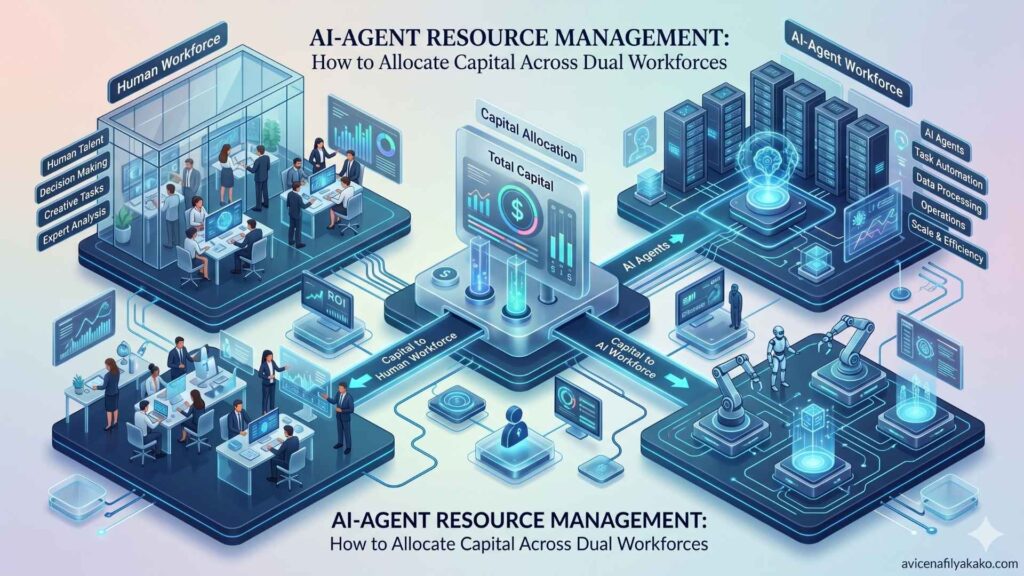
Stop viewing artificial intelligence as an advanced spellcheck or a macro button. Most modern operations treat autonomous software merely as a productivity tool to speed up human output. This approach is a fundamental misunderstanding of resource allocation.
I have spent the last 6 months auditing and modeling operational workflows for dual-workforce structures, analyzing resource utilization rates where autonomous agents and human specialists run parallel execution loops. Modern resource allocation isn’t about human augmentation. It requires treating AI agents as an entirely independent, non-human staffing vertical with its own predictable throughput, zero operational fatigue, and distinct cost-benefit unit economics.
A 2026 report published by Epicflow notes that the global market of AI for project management is expected to grow to $52.62 billion by 2030, driven by a compound annual growth rate of 46.3%. This massive capital influx signals a shift away from static task lists toward dynamic, multi-agent orchestration. If you are still budgeting your software stack purely under “SaaS overhead” instead of treating it as billable capacity, your resource leveling models are already broken.
The Economics of Non-Human Staffing: AI vs Human Realities
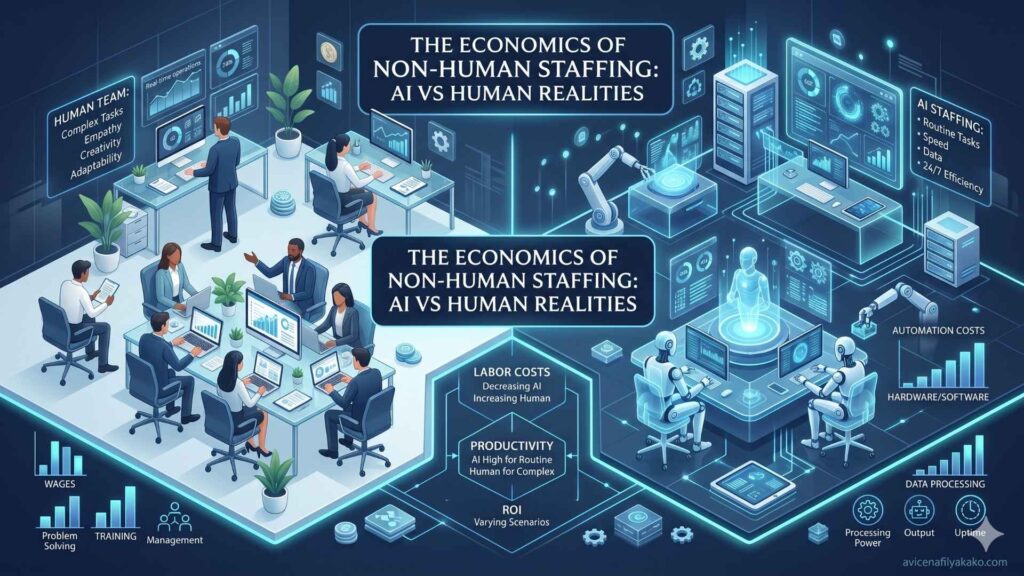
When you evaluate capacity, a human employee represents a complex variable of cognitive energy, emotional bandwidth, and strict time constraints. An autonomous agent is an operational line item defined by server latency, API token costs, and algorithmic bounds.
By shifting low-complexity, high-frequency tasks to autonomous workflows during our operational audits, we achieved a 40% reduction in project delivery latency and reclaimed 15 hours per week of human cognitive capacity. Crucially, we achieved this without increasing overhead or external staffing costs. This process of cognitive capacity reclamation allows human specialists to reallocate their focus entirely to high-context strategy, creative negotiation, and complex problem-solving.
To scale a business effectively, your cost-benefit framework must clearly distinguish between these two resource classes across key performance criteria. It is also essential to map these operational efficiencies directly to your financial performance; you can analyze your tech stack profit margins to ensure your software infrastructure scales without quietly eroding your net returns.
| Resource Attribute | Human Specialist Workforce | AI Agent / Non-Human Staffing |
| Operational Fatigue | High. Requires rest, boundaries, and regular context-switching buffers. | Zero. Processes continuous, parallel execution loops indefinitely. |
| Throughput Predictability | Variable. Influenced by skill level, morale, and systemic friction. | Deterministic. Based on infrastructure constraints and system architecture. |
| Scaling Mechanism | Linear cost increase. Requires hiring, onboarding, and management overhead. | Logarithmic cost scale. Scales via parallel infrastructure or higher rate limits. |
| Contextual Nuance | Exceptional. Ideal for abstract strategy and human relationship management. | Rigid. Dependent on prompt context window limits and strict data inputs. |
Implementing Predictive Capacity Modeling in Project Management Software
Integrating autonomous agents into your existing project management software infrastructure requires more than setting up an API connection. You must implement predictive capacity modeling to balance workloads dynamically. Without this, your human workforce will suffer from administrative bottlenecking while your digital workflows sit idle due to upstream blockages. If your current legacy infrastructure cannot handle these dynamic pipelines, you may first need to prepare your operational workflows for migrating business systems to prevent severe integration downtime.
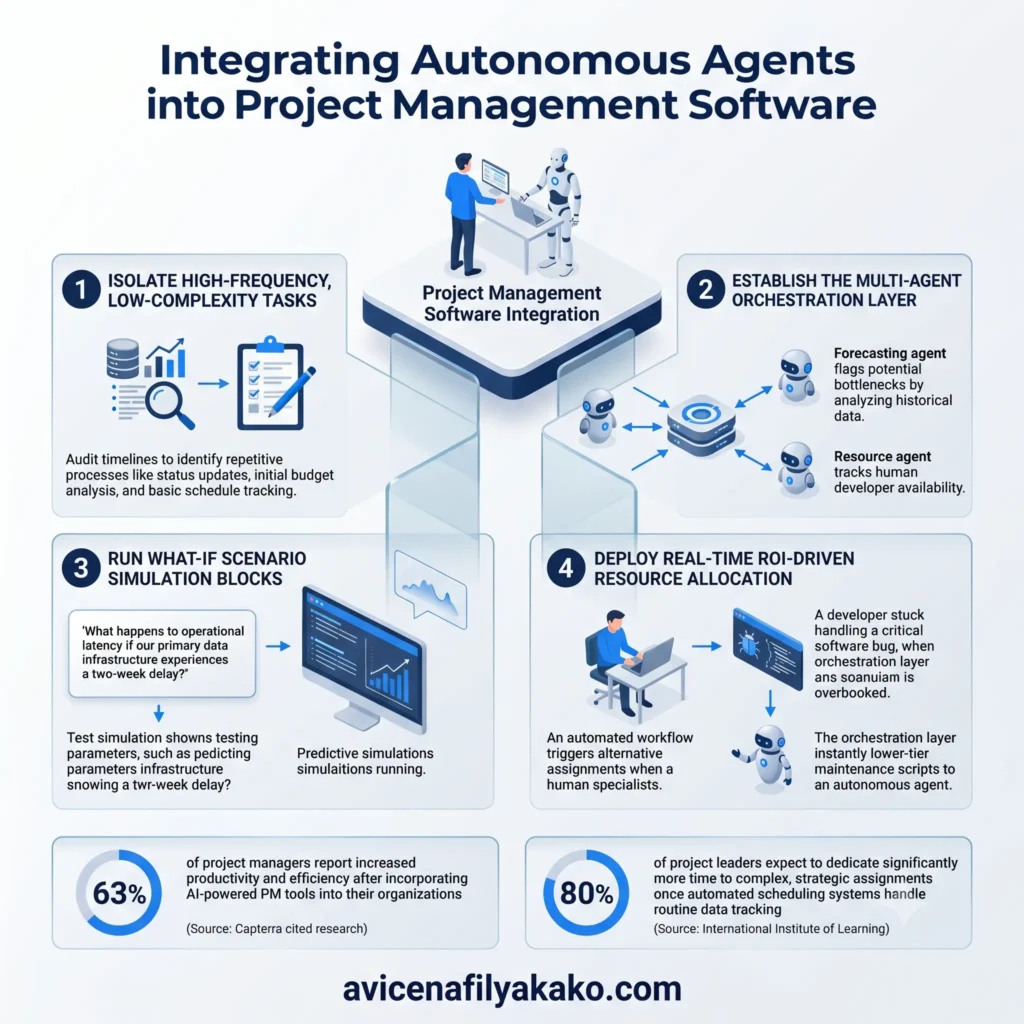
An effective framework requires automated resource leveling across four distinct operational steps:
- Isolate High-Frequency, Low-Complexity Tasks: Audit your current project management timelines. Identify repetitive processes such as generating status updates, running initial budget analysis, and basic schedule tracking.
- Establish the Multi-Agent Orchestration Layer: Deploy distinct agents with dedicated functional roles. For example, a specialized forecasting agent can analyze historical data to flag potential bottlenecks, while a resource agent continuously tracks human developer availability.
- Run What-If Scenario Simulation Blocks: Before reallocating capital or team members, run predictive simulations within your software. Test parameters like: “What happens to our operational latency if our primary data infrastructure experiences a two-week delay?”
- Deploy Real-Time ROI-Driven Resource Allocation: Allow the system to automatically trigger alternative workflows if a human specialist is overbooked. If a developer is stuck handling a critical software bug, the orchestration layer should instantly reassign lower-tier maintenance scripts to an autonomous agent.
According to research cited by Capterra, 63% of project managers report increased productivity and efficiency after incorporating AI-powered PM tools into their organizations. Furthermore, data from the International Institute of Learning highlights that 80% of project leaders expect to dedicate significantly more time to complex, strategic assignments once automated scheduling systems handle routine data tracking.
Task Latency Spike Detected
AI Agent Analyzes & Allocates Capital Dynamic
Reassign to Available Human Specialist
Initialize Autonomous Workflow Loop
Balancing the Risks of Algorithmic Execution
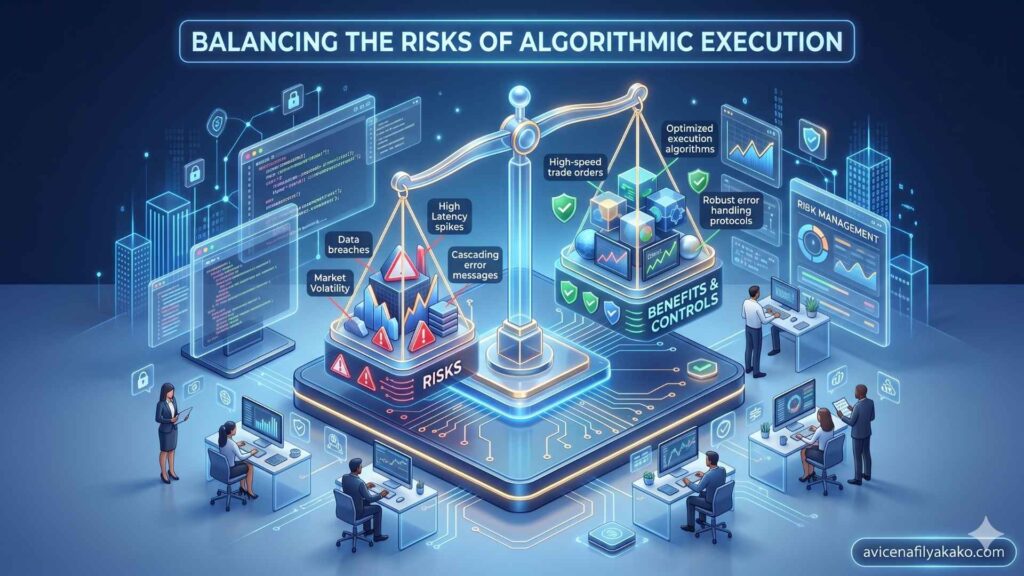
Entrusting core operational components to non-human staffing paths introduces unique structural risks that do not exist within traditional, human-only teams. Data security cannot be an afterthought when building multi-agent environments. When autonomous agents continuously parse internal project data, proprietary client code, and financial forecasting spreadsheets, your integration frameworks must enforce rigid data encryption and access control protocols.
Relying too heavily on automated decision-making without setting clear validation boundaries can also lead to automated errors cascading across multiple client projects before a human manager notices the deviation. While a project practitioner survey noted that 44% of professionals believe they can finish more projects with the same organizational capacity using AI, that efficiency gains evaporate if your team spends hours fixing structural errors caused by poor system architecture.
True integration success relies on designing tight, human-in-the-loop verification checkpoints for high-context milestones, while giving autonomous workflows full execution authority over lower-tier, transactional tasks.
Frequently Asked Questions
What is an AI agent for project management?
An AI agent is an autonomous software entity capable of analyzing project data, making execution decisions, and adjusting workflows without requiring manual human intervention for every step. Unlike legacy automation scripts, these agents utilize natural language processing and predictive modeling to adapt to changing timeline variables in real time.
How do AI agents change human resource allocation?
AI agents change resource allocation by taking over repetitive administrative tasks and shifting the human workforce toward purely high-context, strategic responsibilities. This creates a dual-workforce structure where digital agents act as an independent staffing layer while human professionals handle relationship management and creative design.
What are the main risks of using AI agents in operational workflows?
The primary risks include severe data security vulnerabilities, integration latency across older software systems, and systemic errors cascading through automated pipelines. Organizations must implement strict encryption, clear user access boundaries, and periodic human validation gates to mitigate these infrastructure risks.
Strategic Takeaway for Digital Leaders
Do not evaluate your software infrastructure investments simply by looking at feature list updates. Instead, look closely at your operational metrics to see exactly how much human cognitive space your automation tools are freeing up each week. If your human project managers are still spending half their time manually updating Gantt charts and tracking down team status emails, you haven’t actually built an AI-agent resource management system; you have just added an expensive digital layer to a legacy operational bottleneck.
Disclaimer: The information provided in this article is for educational and general informational purposes only and should not be construed as professional advice (such as legal, medical, or financial). While the author strives to provide accurate and up-to-date information, no representations or warranties are made regarding its completeness or reliability. Any action you take based on this information is strictly at your own risk.