
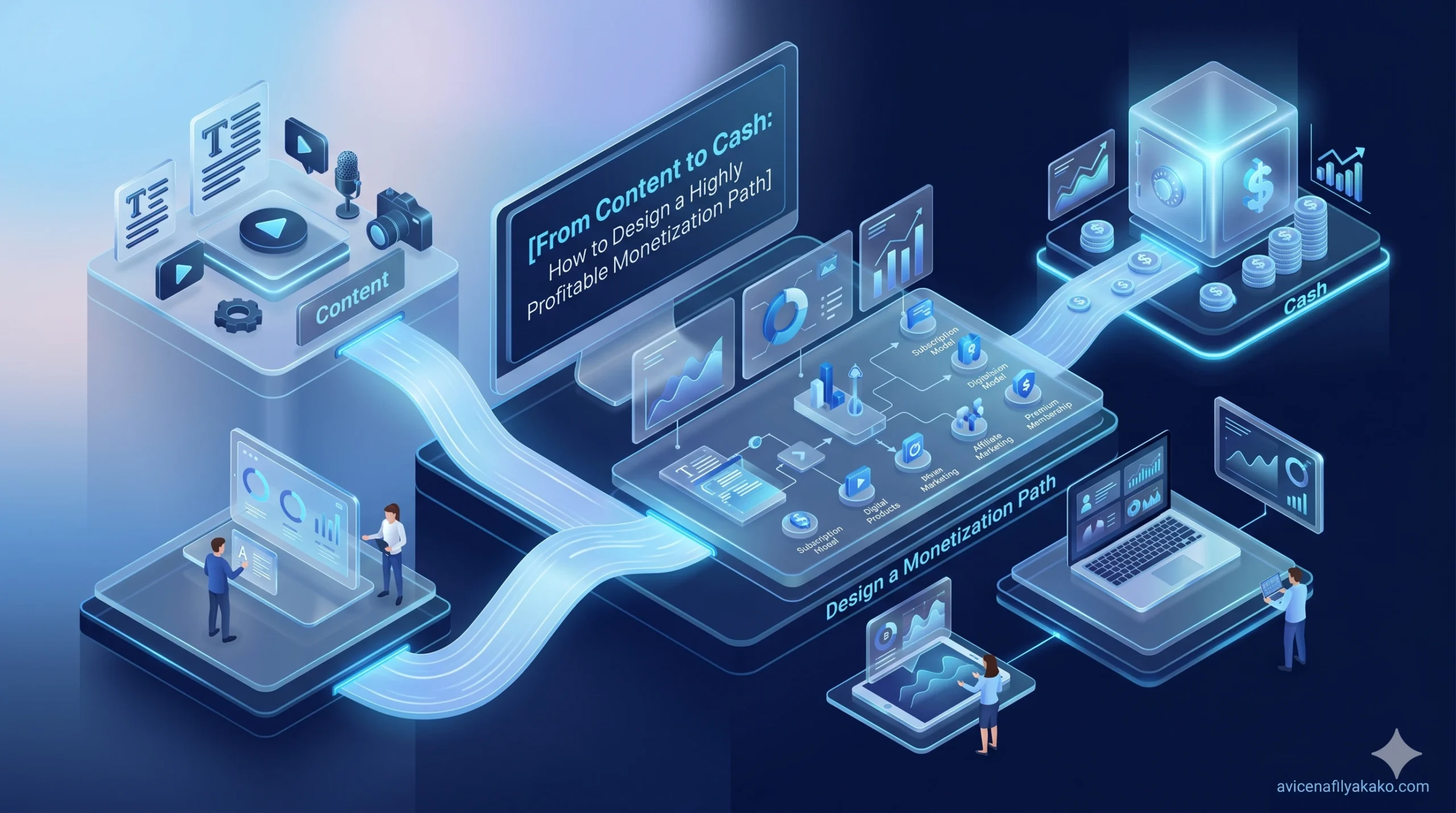
Turning a hobby or a side project into a start up business often feels like trying to build a bridge while you’re already walking across it. You have the content, you have the audience, but how do you bridge the gap to sustainable revenue? The secret isn’t just “selling stuff”; it’s about architecting a deliberate monetization path.
In my experience, the most profitable businesses don’t stumble into success. They treat their content as the top of a funnel that leads directly into a high-value product or service. This shift from “content creator” to “business owner” requires a strategic pivot toward product-led growth.
Defining Your Monetization Path

A monetization path is the logical sequence of steps a lead takes from discovering your free content to purchasing your core offering. Think of it like a staircase. Each step should provide enough value to make the user want to climb to the next level.
“The best way to predict the future is to create it.” – Peter Drucker
To grow your business, you must decide whether you are selling your time, your expertise, or a scalable software solution. Each choice dictates how you build your funnel and interact with your community.
Comparison of Popular Revenue Models
| Model | Primary Focus | Scalability |
| SaaS | Product-led growth | High |
| Lead Gen | Relationship building | Medium |
| Consulting | Expertise & Time | Low |
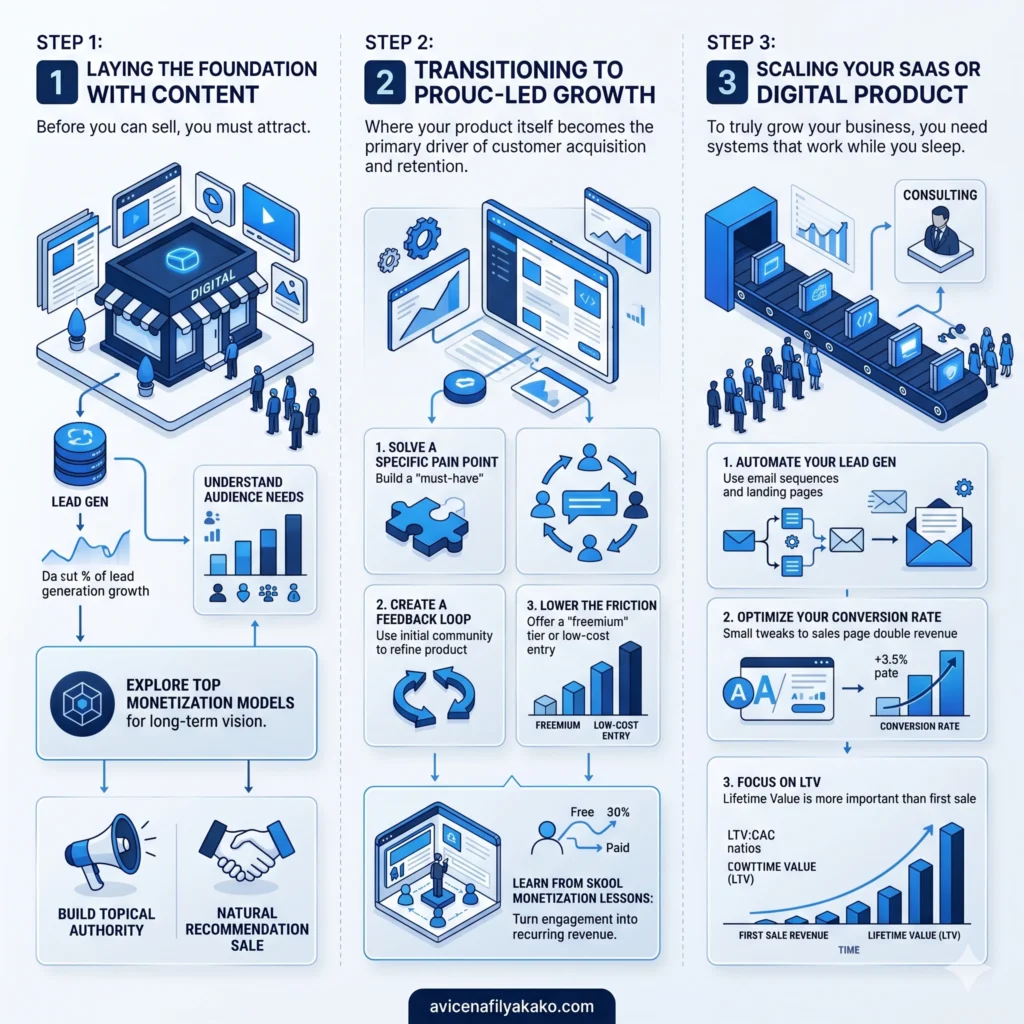
Step 1: Laying the Foundation with Content
Before you can sell, you must attract. High-quality content acts as your digital storefront. By focusing on lead gen early on, you capture the data necessary to understand what your audience actually needs.
Before scaling, it is crucial to perform a content inventory valuation to identify which existing assets have the highest potential for conversion.
If you’re looking for deep dives on sustainable models, you might explore top monetization models to see which aligns with your long-term vision. The goal is to build topical authority so that when you finally present a product, the “sale” feels like a natural recommendation.
Step 2: Transitioning to Product-Led Growth
Once you have an audience, the most effective monetization path usually involves product-led growth. This is where your product itself becomes the primary driver of customer acquisition and retention.
- Solve a specific pain point: Don’t build a “nice-to-have”; build a “must-have.”
- Create a feedback loop: Use your initial community to refine the product.
- Lower the friction: Offer a “freemium” tier or a low-cost entry point.
A great example of this is seen in modern community platforms. You can learn a lot from Skool monetization lessons about how to turn engagement into recurring revenue without alienating your followers.
Step 3: Scaling Your SaaS or Digital Product
Scaling is where many entrepreneurs hit a ceiling. To truly grow your business, you need systems that work while you sleep. This is the beauty of SaaS and digital products. Unlike consulting, these models allow you to serve 1,000 customers as easily as 10.
- Automate your lead gen: Use email sequences and landing pages.
- Optimize your conversion rate: Small tweaks to your sales page can double your revenue.
- Focus on LTV: The Lifetime Value of a customer is more important than the first sale.
To ensure your traffic actually converts, focus your SEO efforts on targeting revenue-first keywords that attract users with high commercial intent.
Avoiding the “Free Content Trap”
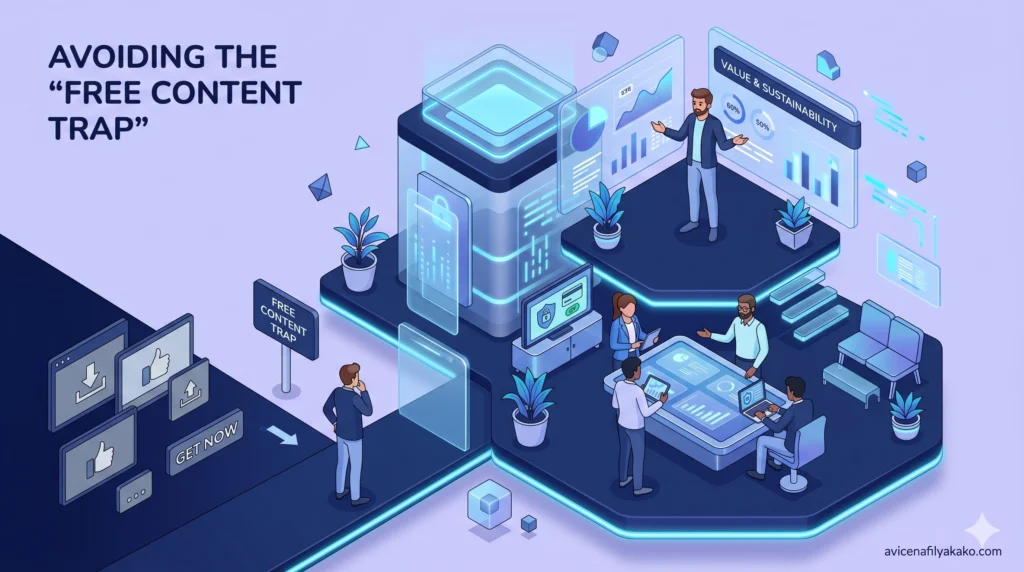
Many creators get stuck giving away too much for free. They fear that charging will drive people away. However, your most loyal followers want to pay you for a solution that saves them time or solves a problem.
Think of your free content as the “What” and your paid product as the “How.” You tell them what they need to do for free, and you show them how to do it (or provide the tool to do it) for a fee. This is the hallmark of the most profitable businesses in the digital age.
Building Resilience in Your Monetization Path
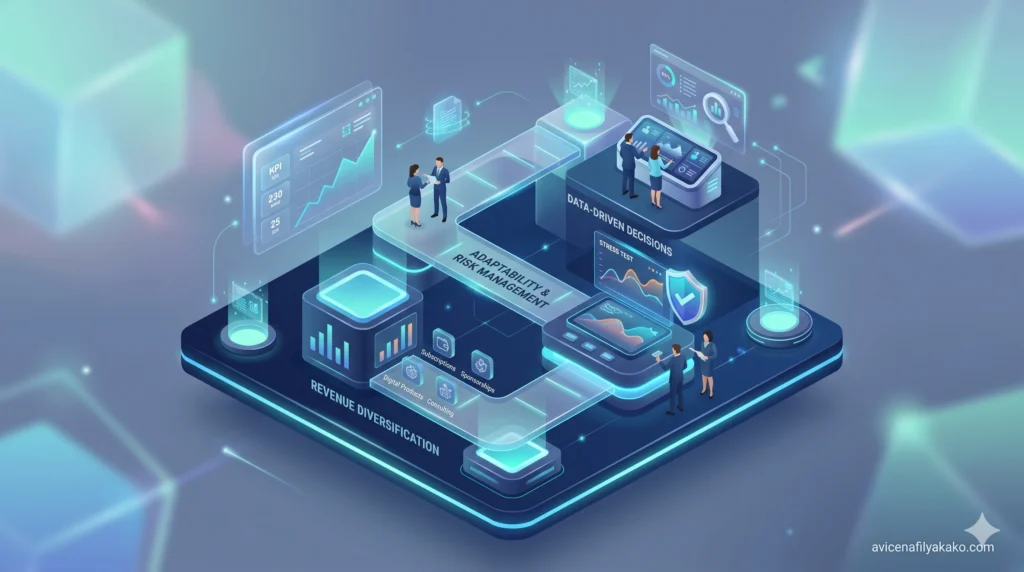
Market trends change, but a well-structured monetization path is resilient. By diversifying your income streams—perhaps combining a SaaS tool with a high-ticket mastermind—you protect your start up business from volatility.
Remember, the path isn’t a straight line. It’s an iterative process of testing, learning, and refining. Stay close to your data, listen to your customers, and don’t be afraid to pivot if the market signals a different need.
FAQ
What is the most effective monetization path for beginners?
The most effective path for beginners is usually a combination of high-value content and lead gen that culminates in a digital product or service. This allows you to build trust and validate your ideas before investing heavily in complex infrastructure or software development.
How does product-led growth differ from traditional sales?
Product-led growth relies on the product’s value to drive user acquisition and expansion, whereas traditional sales rely on human-led outreach and marketing campaigns. In a product-led model, the user experiences the value firsthand, often through a free trial, before committing to a purchase.
Can a start up business succeed without a clear monetization strategy?
A start up business can survive temporarily on funding or passion, but it cannot achieve long-term sustainability without a clear and tested revenue model. Having a strategy ensures that every piece of content and every feature update contributes directly to the financial health of the company.
For those operating in professional services, implementing a robust B2B funnel lead generation strategy can significantly shorten the sales cycle and improve lead quality.
Disclaimer: The information provided in this article is for educational and general informational purposes only and should not be construed as professional advice (such as legal, medical, or financial). While the author strives to provide accurate and up-to-date information, no representations or warranties are made regarding its completeness or reliability. Any action you take based on this information is strictly at your own risk.
This article was authored by Avicena Fily A Kako, a Digital Entrepreneur & SEO Specialist using AI to scale business and finance projects.