
Most AI-generated roadmaps fail before you even finish week one. You open an AI generator, type “create a comprehensive curriculum for data science,” and copy-paste the neatly formatted bullet points into your notes. It looks perfect.
Then you start learning, hit a conceptual wall, and realize the LLM ordered the topics based on web-text frequency rather than cognitive load or prerequisite logic.
Accelerated learning isn’t about generating static lists. To achieve true rapid skill acquisition, you must treat AI not as a digital textbook, but as a dynamic curriculum architect. By structuring deliberate prompting AI sequences, you can map complex domains, diagnose your own knowledge gaps, and build hyper-personalized learning paths that adapt as fast as you do.
The Flaw of the Static Roadmap

Standard web tutorials tell you to use AI to skip the planning phase. That is a mistake. When you ask a baseline model to design a curriculum, it optimizes for plausibility, not pedagogical soundness.
A 2024 study published in Frontiers in Education analyzed AI’s role in personalized learning and highlighted that while AI excels at content curation, human-in-the-loop validation remains essential to correct structural biases and sequence complex concepts accurately. Left entirely to its own devices, a standard prompt often yields an overwhelming sequence that ignores the practical constraints of working memory.
True rapid learning requires a deliberate architecture. You need to break the skill down into structural components before you let an LLM write your daily schedule.
Step-by-Step Architecture for AI-Driven Learning Paths
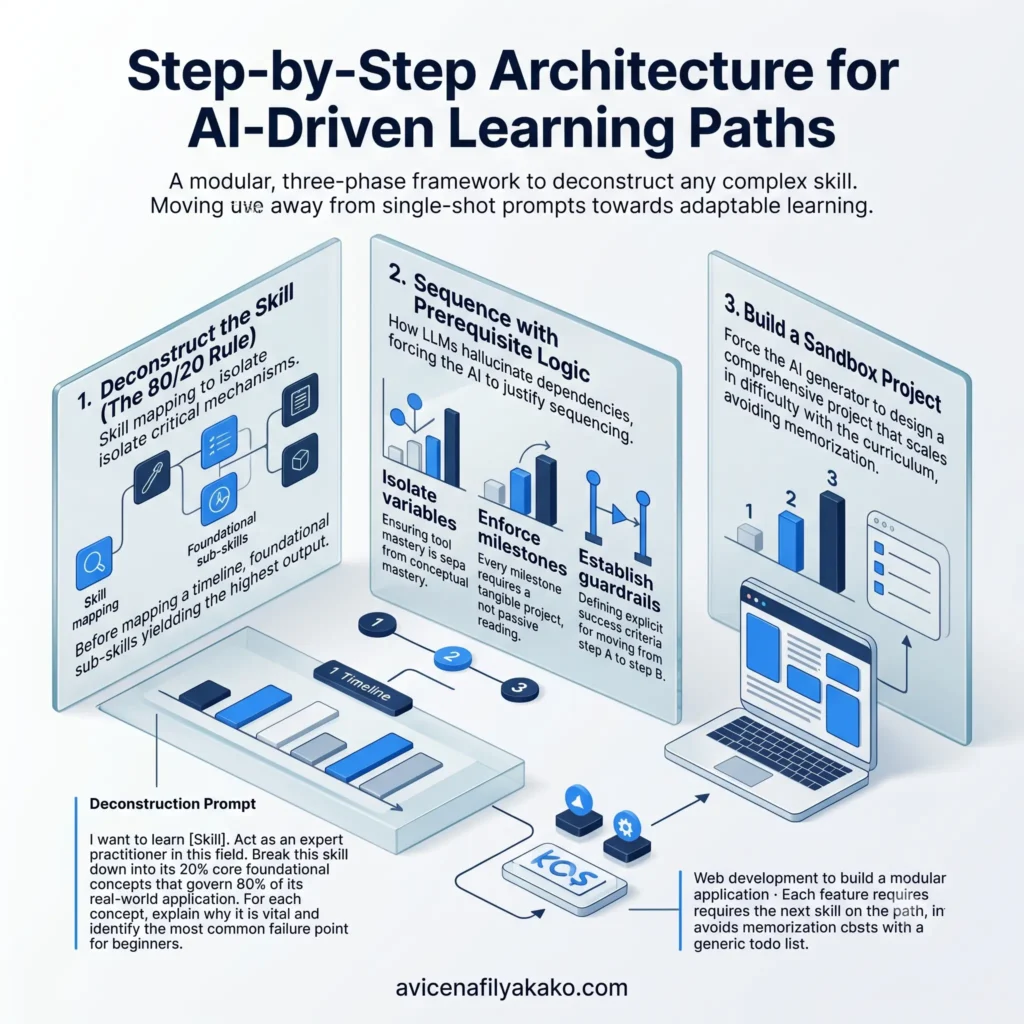
To build an adaptable learning path, stop using single-shot prompts. Use this modular, three-phase framework instead to deconstruct any complex skill.
1. Deconstruct the Skill (The 80/20 Rule)
Before mapping a timeline, identify the foundational sub-skills that yield the highest output. Your goal is skill mapping—isolating the critical mechanisms of a discipline.
The Deconstruction Prompt: “I want to learn [Skill]. Act as an expert practitioner in this field. Break this skill down into its 20% core foundational concepts that govern 80% of its real-world application. For each concept, explain why it is vital and identify the most common failure point for beginners.”
2. Sequence with Prerequisite Logic
LLMs frequently hallucinate dependencies, placing advanced applications before foundational theory. You must force the AI to justify its sequencing.
- Isolate variables: Ensure tool mastery is separated from conceptual mastery.
- Enforce milestones: Every milestone must require a tangible project, not a passive reading assignment.
- Establish guardrails: Define explicit success criteria for moving from step A to step B.
- Execute with precision: Translate your theoretical milestones into actual daily output. You can use an AI calendar optimization strategy for strict time blocking to ensure your learning deep-work sessions are protected and dynamically scheduled around your routine.
3. Build a Sandbox Project
Do not memorize definitions. Force the AI generator to design a comprehensive project that scales in difficulty alongside your curriculum. If you are learning web development, don’t build a generic todo list; build a modular application where each feature requires the next skill on your path.
Static vs. Dynamic Learning Paths
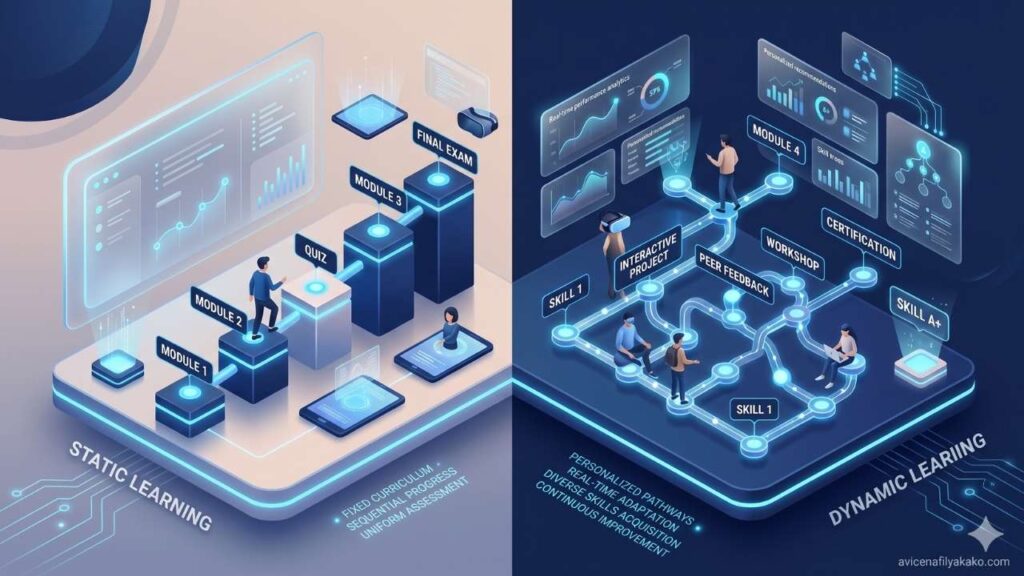
The table below contrasts traditional, rigid learning structures against an optimized, AI-driven dynamic framework.
| Feature | Traditional / Static Roadmap | Dynamic AI Learning Path |
|---|---|---|
| Structure | Linear time-based intervals (e.g., Week 1, Week 2). | Milestone-based execution triggers. |
| Adaptability | Fixed. If you get stuck, the timeline breaks. | Mapped dynamically through diagnostic prompts. |
| Feedback | Passive self-assessment or delayed grading. | Real-time code/text analysis via targeted LLM evaluation. |
| Source Material | Tied to a single textbook or course syllabus. | Aggregated across documentation, repos, and theory. |
While aggregating diverse source materials keeps your curriculum flexible, it also risks information overload. To manage this influx of data efficiently, you can streamline your ingestion process by setting up an automated reading list and custom AI summarizer workflow to distill documentation, research papers, and technical repos before mapping them into your active learning milestones.
Advanced Prompting AI Techniques for Real-Time Course Correction
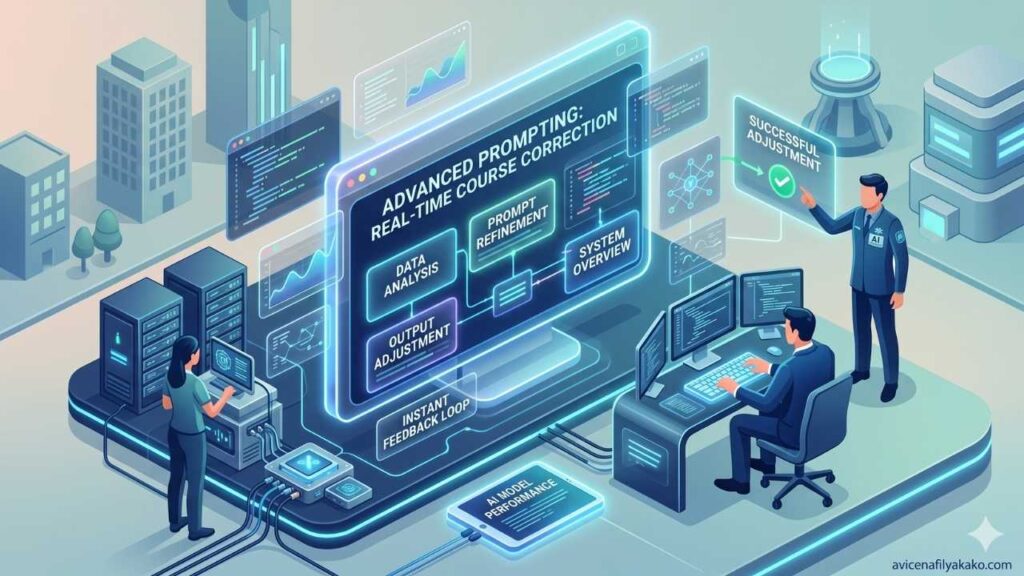
When executing your path, you will inevitably hit walls. Instead of abandoning the curriculum, use specific diagnostic prompts to restructure the path on the fly.
Developers building personalized skill path generators often leverage structured JSON schemas to force AI models to output precise, node-based learning trees. You can replicate this logic in plain text by using architectural constraints.
The “Explain the Gap” Prompt
When a concept feels impenetrable, it means you lack a hidden prerequisite. Use this prompt to uncover it:
“I am currently trying to learn [Concept B], but I do not understand [Specific Element]. Act as a diagnostic tutor. Identify the hidden foundational concept (Concept A) that I am likely missing, explain Concept A using a concrete code/real-world example, and show how it connects directly to Concept B.”
💡 Cara pakai: Ganti teks di dalam kotak kuning dengan konsep yang sedang Anda pelajari sebelum mengirimkannya ke AI.
The Socratic Sandbox Prompt
Passive reading creates the illusion of competence. To test true acquisition, force the AI to test you dynamically:
“Act as an aggressive Socratic interviewer. Test my understanding of [Concept]. Ask me ONE targeted, scenario-based question at a time. Do not give me multiple choice. Wait for my response, grade my answer critically, point out structural flaws in my reasoning, and then ask the next follow-up question.”
💡 Cara pakai: Ganti [Concept] dengan topik ujian Anda (misal: *SEO Semantic Mapping* atau *Dividend Growth Investing*).
AI Skill Acquisition Loop
Maintaining Long-Term Knowledge Retention

Velocity without retention is just wasted energy. To prevent your rapid skill acquisition from evaporating, your AI system must integrate an automated feedback loop.
Every time you complete a project milestone on your learning path, feed your work back into the prompt window. Ask the AI to audit your output specifically for efficiency, security, or stylistic best practices depending on the domain.
Use the model to generate highly contextual Flashcard Q&As based solely on the mistakes you made during that project. This ensures your spaced-repetition loops target your actual cognitive weak spots rather than generic definitions. You are no longer memorizing the internet; you are patches the exact holes discovered in your personal knowledge base.
To take this a step further, consider moving away from linear note-taking apps entirely. Instead, compile these insights systematically by learning how to build a personal AI knowledge graph in Obsidian to visually map out and connect your newly acquired technical skills over time.
Frequently Asked Questions
How do I use AI to create a personalized learning path?
You use AI by breaking down a skill into its core components, forcing the model to sequence those components based on prerequisite logic, and attaching concrete projects to every major milestone. Avoid generic, single-sentence prompts; instead, provide the AI with your specific constraints, time commitments, and current skill baseline to get an accurate, hyper-tailored curriculum.
Can AI replace traditional curriculum design?
AI replaces the speed of curriculum generation but cannot replace the pedagogical validation required for high-stakes domains. While an LLM can rapidly map out technical workflows or conceptual hierarchies, human oversight is still necessary to verify that the generated resources, documentation links, and project sequences are accurate and up to date.
What is the biggest mistake people make when prompting AI for learning?
The biggest mistake is treating the AI as a passive answer engine rather than an active examiner. Learners usually ask the AI to explain a topic over and over again, which leads to passive consumption, rather than forcing the AI to generate hard problems, criticize their work, and probe for conceptual blind spots.
Actionable Next Steps
To build a high-retention learning path today, follow this immediate protocol:
- Select your target domain and isolate a single, narrow output you want to create within 14 days.
- Run the Deconstruction Prompt to strip away the fluff and isolate the mandatory 20% of foundational concepts.
- Establish a strict feedback cadence where you do not allowed yourself to move to the next structural node until you have successfully written a script, built a model, or produced an artifact that passes an AI-driven Socratic audit.
Disclaimer: The information provided in this article is for educational and general informational purposes only and should not be construed as professional advice (such as legal, medical, or financial). While the author strives to provide accurate and up-to-date information, no representations or warranties are made regarding its completeness or reliability. Any action you take based on this information is strictly at your own risk.