
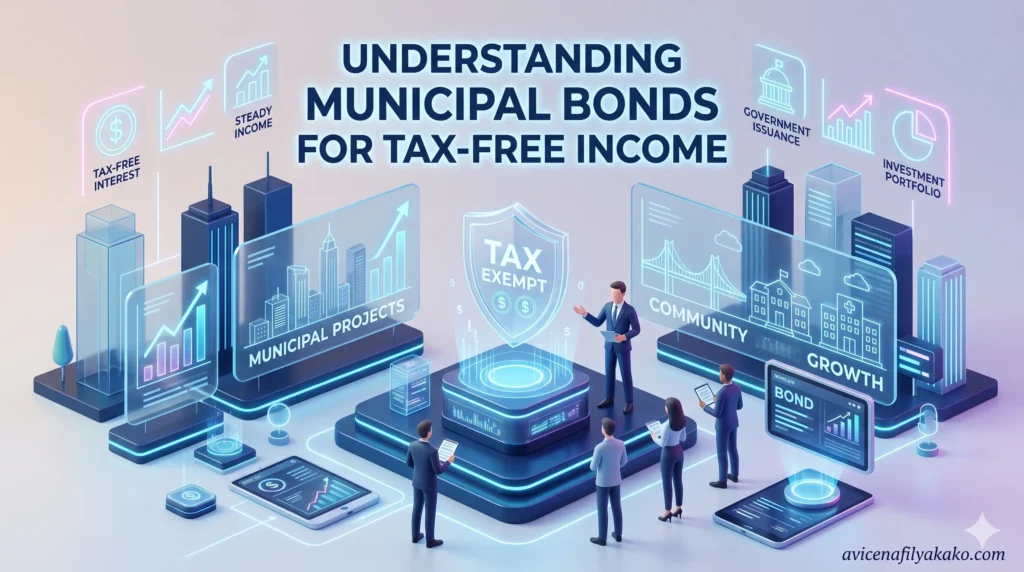
If you have ever driven on a smooth toll road or sent your children to a newly renovated public school, you have seen Municipal Bonds in action. These financial instruments are essentially “IOUs” issued by local governments to fund essential infrastructure. While they help build communities, they serve a dual purpose for you: they are one of the most powerful tools for generating tax-free income.
Think of Municipal Bonds like lending money to your neighbor to fix their roof, except your neighbor is a city, and they agree to pay you back with interest—interest that the IRS generally cannot touch.
Why Municipal Bonds Stand Out in Your Portfolio

Most investments come with a “tax bite.” When you earn interest from a standard corporate bond or a savings account, a portion of that profit evaporates into federal (and often state) taxes. Municipal Bonds, however, offer a unique sanctuary.
While munis provide a tax-sheltered way to earn interest, investors seeking to build long-term wealth might also consider a dividend growth investing framework to benefit from rising corporate payouts alongside their fixed-income holdings.
The Power of Tax-Exemption
The primary draw here is the federal tax-exempt status of the interest. If you live in the state where the bond is issued, you might even dodge state and local taxes, too. This is often referred to as a “triple tax-exempt” bond.
“The tax-exempt bond market is the primary means by which our nation’s infrastructure is financed.” – Municipal Securities Rulemaking Board (MSRB).
To understand if these are right for you, you must look at the tax-equivalent yield. This formula helps you compare a tax-free “muni” to a taxable corporate bond by showing you what a taxable bond would need to pay to equal the muni’s take-home return.
Types of Municipal Bonds
Not all “munis” are created equal. They generally fall into two buckets:
- General Obligation (GO) Bonds: These are backed by the “full faith and credit” of the issuer. The government can use its taxing power to ensure you get paid.
- Revenue Bonds: These are repaid using income from a specific project, such as tolls from a bridge or fees from a water treatment plant.
Assessing Risk: Credit Rating and Security

While Municipal Bonds are generally considered safer than stocks, they aren’t entirely risk-free. Before you dive in, you need to check the credit rating of the issuing entity. Agencies like Moody’s or S&P assign grades (like AAA or Baa) to indicate the likelihood of the issuer defaulting.
| Bond Type | Primary Security | Risk Level |
|---|---|---|
| GO Bonds | Taxing Power | Typically Lower |
| Revenue Bonds | Project Income | Moderate |
| High-Yield Munis | Non-Rated Projects | Higher |
Why Credit Ratings Matter
A high credit rating acts like a financial GPA. It tells you how disciplined the city or state is with its money. While defaults are rare in the municipal world compared to the corporate world, they do happen.
Calculating Your Real Return

To truly master Municipal Bonds, you need to speak the language of yield. If you are in a high tax bracket, a 4% yield on a muni might actually be more valuable than a 6% yield on a taxable bond.
Comparing these yields is crucial because tax-free interest is just one way to generate cash flow; for those comfortable with more active management, a covered calls income strategy can serve as a powerful taxable alternative to boost your portfolio’s total yield.
The Tax-Equivalent Yield Formula
You can calculate your comparable return using this logic:
For example, if you are in the 35% tax bracket, a 4% muni yield is equivalent to a 6.15% taxable yield. You can find more granular data on how these yields fluctuate at the MSRB.
Strategies for Building a Muni Portfolio

I often suggest that investors don’t just “buy and forget.” Markets change, and so do interest rates. Here is how you can approach it:
- Bond Laddering: Buy bonds that mature at different intervals (e.g., 2, 4, 6, and 8 years). This protects you from being locked into a low rate if interest rates rise. This strategy is similar to capital preservation techniques used in banking; you can explore this guide on building a CD ladder to see how a staggered maturity schedule works for short-term cash reserves.
- Focus on Your Home State: To maximize tax savings, look for issuers within your own borders to capture that state-tax exemption.
- Check the Call Provision: Some bonds are “callable,” meaning the issuer can pay you back early if interest rates drop. Always check the “yield to call” before buying.
As Raul Elizalde noted in Forbes, while these are tax-free, they are not risk-free, particularly regarding interest rate fluctuations and inflation.
Common Misconceptions About Municipal Bonds
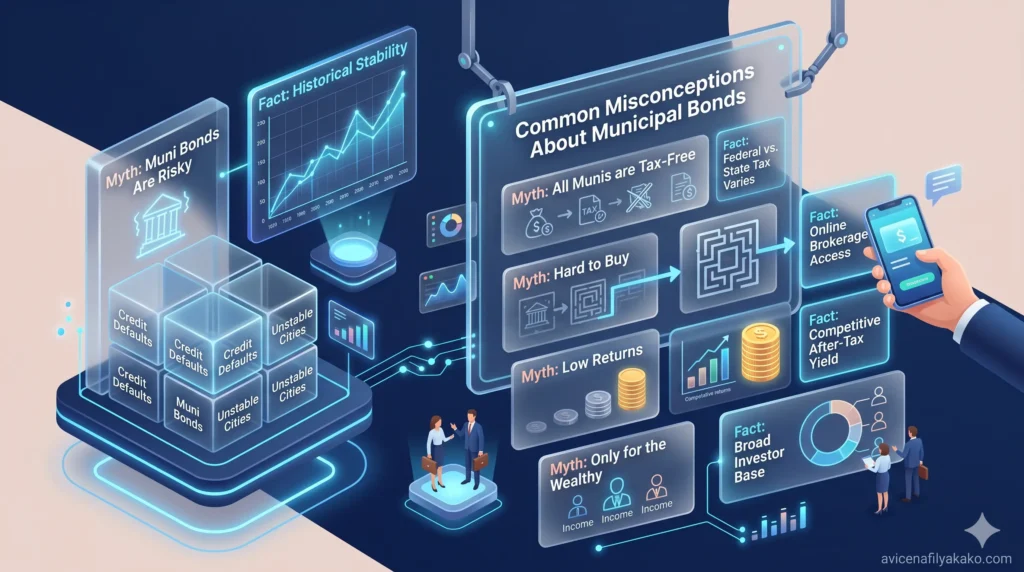
Many people assume Municipal Bonds are only for the ultra-wealthy. While they are incredibly effective for those in high tax brackets, they offer stability for anyone looking to preserve capital.
Another myth is that they are “set it and forget it” assets. You should still monitor the economic health of the municipality. A city’s ability to pay back GO bonds depends on its local economy and tax base. For a deep dive into the basics, Investopedia provides an excellent foundational breakdown.
FAQ: Frequently Asked Questions
Are municipal bonds 100% tax-free?
No, while the interest is typically exempt from federal taxes, it may still be subject to state or local taxes if you buy a bond from a state where you do not reside. Additionally, if you sell a bond for more than you paid for it, you may owe capital gains taxes.
What is the difference between GO bonds and revenue bonds?
GO bonds are backed by the general taxing power of the government, whereas revenue bonds are backed specifically by the earnings of a project, like a stadium or airport. Consequently, GO bonds are often viewed as more secure.
Can a municipal bond lose value?
Yes, the market price of Municipal Bonds can fluctuate based on changes in interest rates or the issuer’s credit rating. If interest rates go up, the market value of existing bonds usually goes down.
Disclaimer: The information provided in this article is for educational and general informational purposes only and should not be construed as professional advice (such as legal, medical, or financial). While the author strives to provide accurate and up-to-date information, no representations or warranties are made regarding its completeness or reliability. Any action you take based on this information is strictly at your own risk.
This article was authored by Avicena Fily A Kako, a Digital Entrepreneur & SEO Specialist using AI to scale business and finance projects.