
Generating a consistent paycheck from the stock market often feels like chasing a mirage. However, if you already own shares of a solid company, you might be sitting on a “rentable” asset. By using covered calls, you can transform your stagnant stock holdings into an active source of cash flow.
Think of a covered call like owning a vacation home. You own the property (the stock), and while you wait for its value to appreciate, you rent it out to someone else for a fee. In the world of finance, that “rent” is known as the option premium.
How Covered Calls Function in Your Portfolio

A covered call is a strategy where you sell a call option for a stock you already own. For every 100 shares you hold, you can sell one call contract. This obligates you to sell your shares at a specific strike price if the buyer chooses to exercise their right before the expiration date.
The Role of Option Premium and Theta Decay
When you sell a call, the buyer pays you an option premium upfront. This cash lands in your account immediately, regardless of what the stock does next. This is the “income” portion of the strategy.
One of your greatest allies in this process is theta decay. Options are wasting assets; they lose value as they get closer to their expiration date. As a seller, you want the option’s value to erode so you can either buy it back cheaper or let it expire worthless, keeping the full premium.
“The stock market is a device for transferring money from the impatient to the patient.” — Warren Buffett
Key Components of the Trade
- The Underlying Asset: You must own 100 shares of the stock (this is the “covered” part).
- Strike Price: The price at which you agree to sell your shares.
- Expiration Date: The “deadline” for the contract.
Strategic Selection: Strike Prices and Timelines
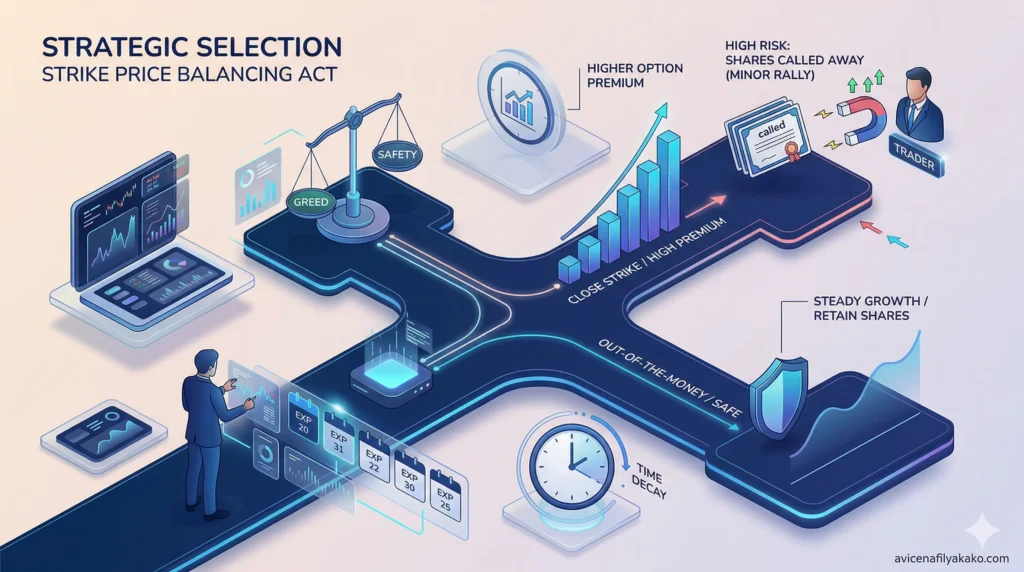
Choosing the right strike price is a balancing act between greed and safety. If you pick a strike too close to the current price, you earn a higher option premium, but you risk having your shares “called away” (sold) during a minor rally.
| Strategy Type | Strike Price Placement | Risk/Reward Profile |
|---|---|---|
| Aggressive | At-the-Money (ATM) | High premium; high chance of losing shares. |
| Conservative | Out-of-the-Money (OTM) | Lower premium; allows for more stock growth. |
If you want to maximize covered calls for long-term income, I recommend looking at “Out-of-the-Money” strikes. This gives your stock room to breathe and grow while you still collect a modest paycheck.
Step-by-Step: Executing Your First Covered Call
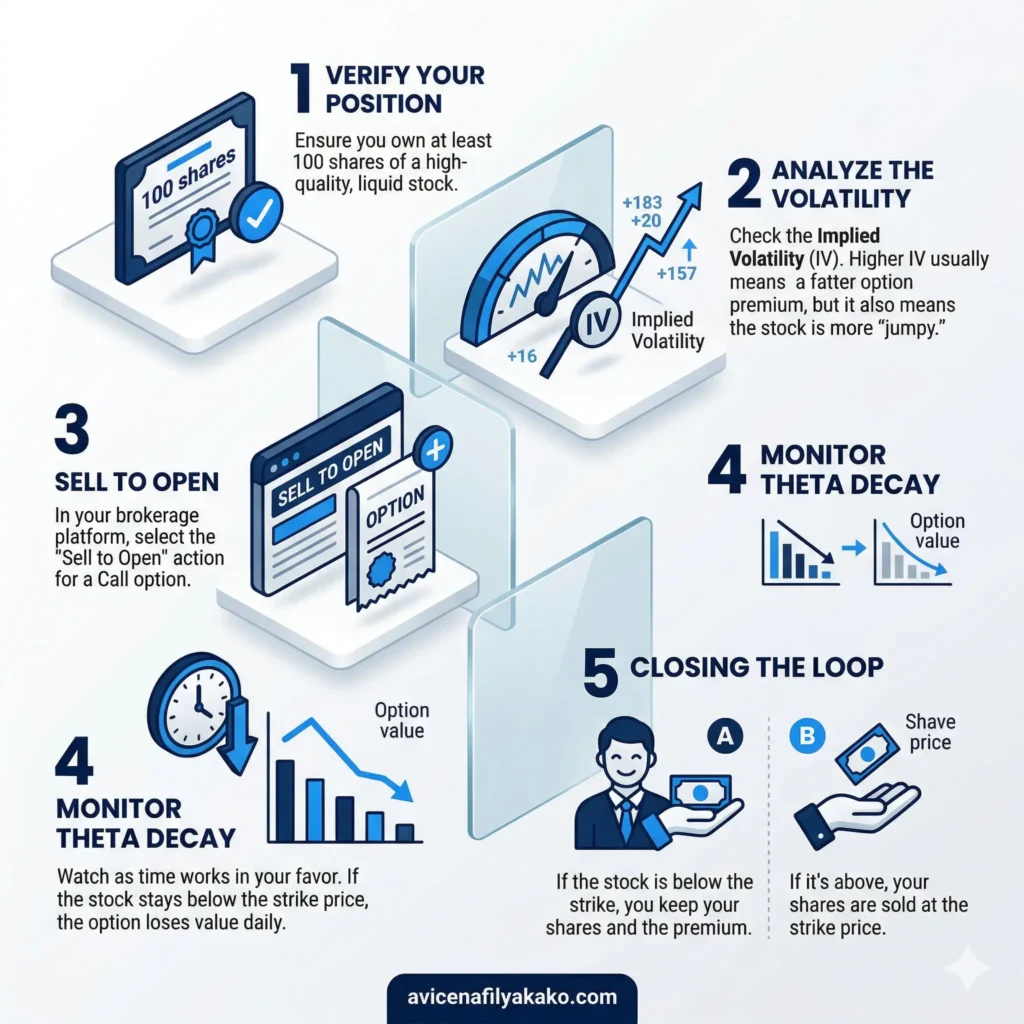
- Verify Your Position: Ensure you own at least 100 shares of a high-quality, liquid stock.
- Analyze the Volatility: Check the Implied Volatility (IV). Higher IV usually means a fatter option premium, but it also means the stock is more “jumpy.”
- Sell to Open: In your brokerage platform, select the “Sell to Open” action for a Call option.
- Monitor Theta Decay: Watch as time works in your favor. If the stock stays below the strike price, the option loses value daily.
- Closing the Loop: On expiration, if the stock is below the strike, you keep your shares and the premium. If it’s above, your shares are sold at the strike price.
Selecting the right underlying asset is critical; I find that applying a dividend growth investing framework helps identify high-quality companies that provide a reliable baseline yield while you layer additional income through call premiums.
The Risks: What No One Tells You
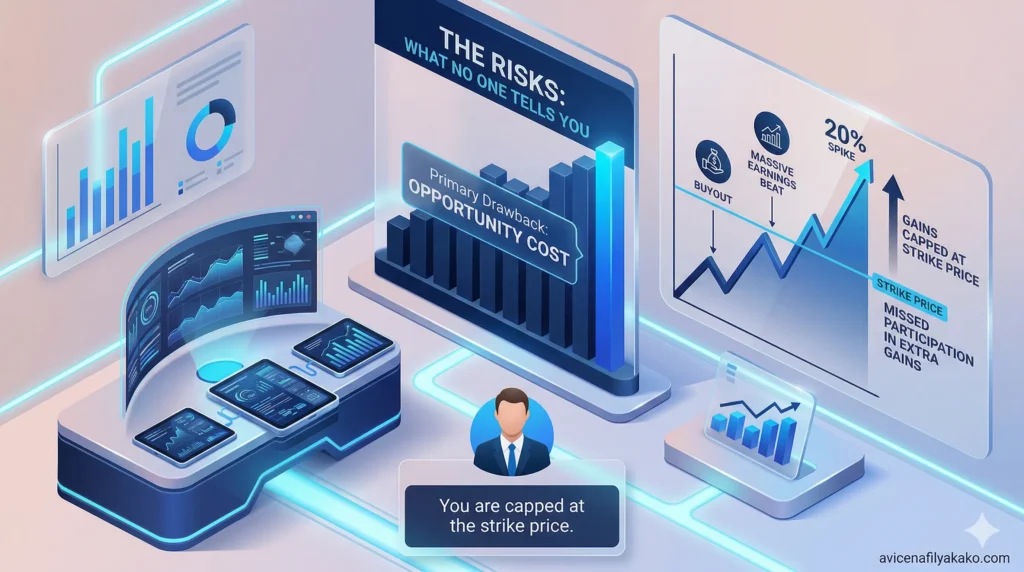
While covered calls are often touted as “low risk,” they aren’t “no risk.” The primary drawback is the opportunity cost. If your stock suddenly rockets up 20% due to a buyout or massive earnings beat, you are capped at the strike price. You won’t participate in those extra gains because you’ve already promised to sell your shares at a lower price.
Furthermore, covered calls provide very little protection against a market crash. If the stock price plummets, the small option premium you collected won’t be enough to offset the loss in your share value. SEC Investor Bulletin on Option Basics
If the individual stock risk of this strategy feels too concentrated for your style, you might prefer the broader diversification found in an index fund sampling strategy, which allows you to capture market returns with lower volatility and reduced administrative costs.
Maximizing Success with Covered Calls
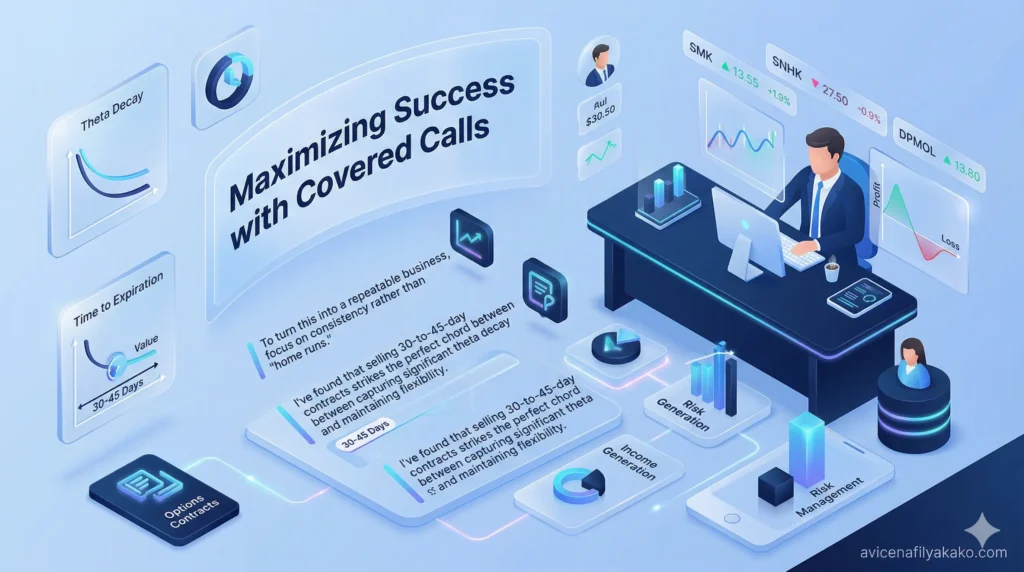
To turn this into a repeatable business, focus on consistency rather than “home runs.” I’ve found that selling 30-to-45-day contracts strikes the perfect chord between capturing significant theta decay and maintaining flexibility.
Remember, the goal of using covered calls for income is to augment your returns, not to gamble on short-term price movements. Treat it like a landlord treats a rental property: maintain the asset, collect the rent, and stay disciplined.
Frequently Asked Questions
What happens to my covered calls if the stock price drops?
You keep the entire option premium you collected, which slightly lowers your “break-even” point on the stock. However, you still realize the paper loss on the shares themselves, and you may find it harder to sell another call at a profitable strike price in the next cycle.
Can I lose my shares when selling covered calls?
Yes, your shares will be sold if the stock price is above the strike price at expiration. This is known as being “assigned,” and while you lose the shares, you keep the cash from the sale plus the premium you earned at the start.
Is the income from covered calls taxed differently?
Yes, in most jurisdictions, the option premium is treated as a short-term capital gain, regardless of how long you’ve held the underlying stock. I suggest consulting with a tax professional to see how this fits into your specific financial picture.
Disclaimer: The information provided in this article is for educational and general informational purposes only and should not be construed as professional advice (such as legal, medical, or financial). While the author strives to provide accurate and up-to-date information, no representations or warranties are made regarding its completeness or reliability. Any action you take based on this information is strictly at your own risk.
This article was authored by Avicena Fily A Kako, a Digital Entrepreneur & SEO Specialist using AI to scale business and finance projects.