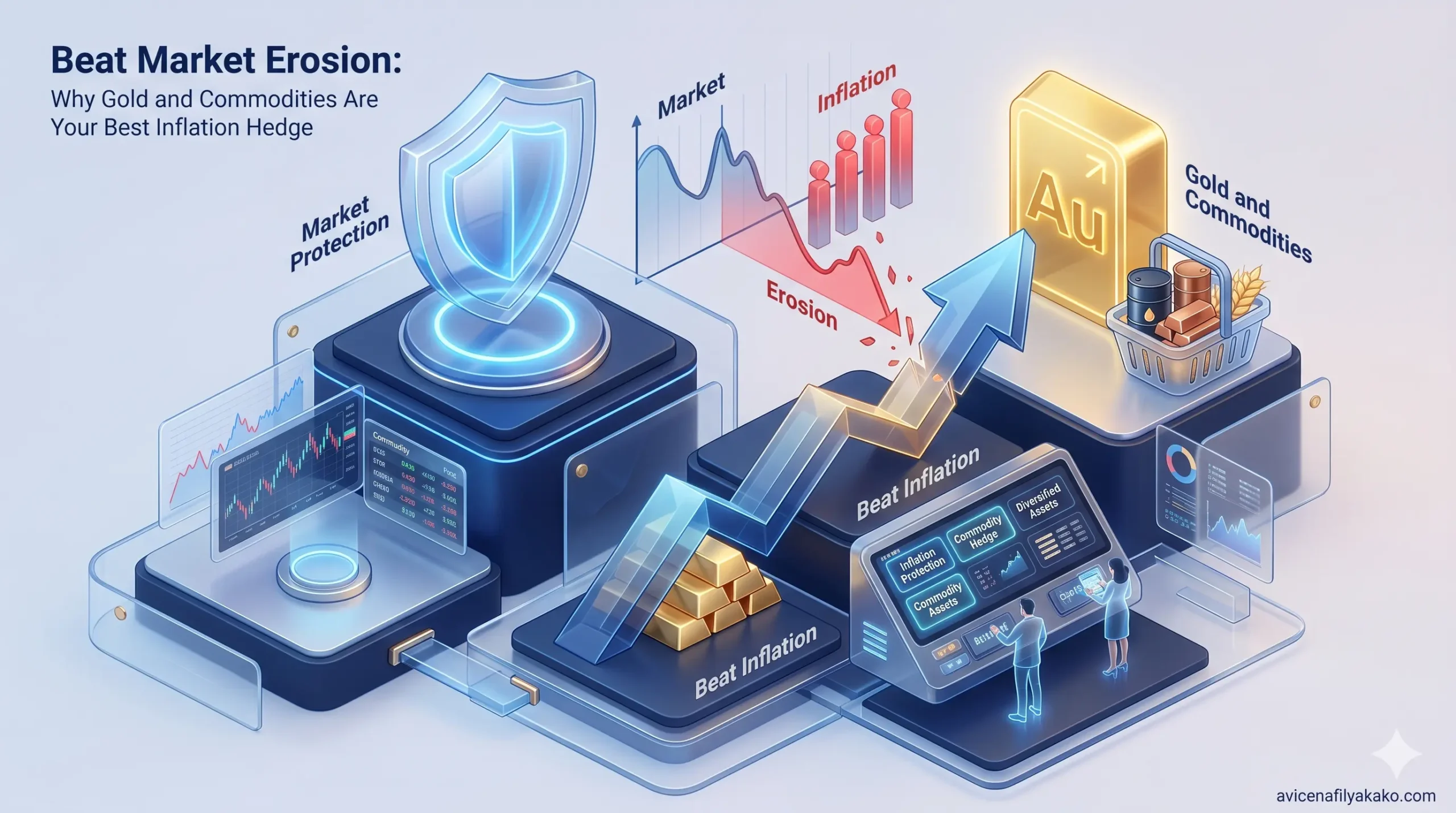
Imagine your wealth as a sandcastle on the beach. The incoming tide represents the silent, eroding force of inflation. If you leave your cash sitting in a standard bank account, that tide will slowly wash your purchasing power away. To protect your hard-earned savings, you need a financial sea wall.
When fiat currencies lose their bite, tangible assets step up to the plate. In this guide, I will show you how integrating tangible assets into your strategy can protect your purchasing power from economic erosion.
Why Tangible Assets Matter: The Ultimate Inflation Hedge
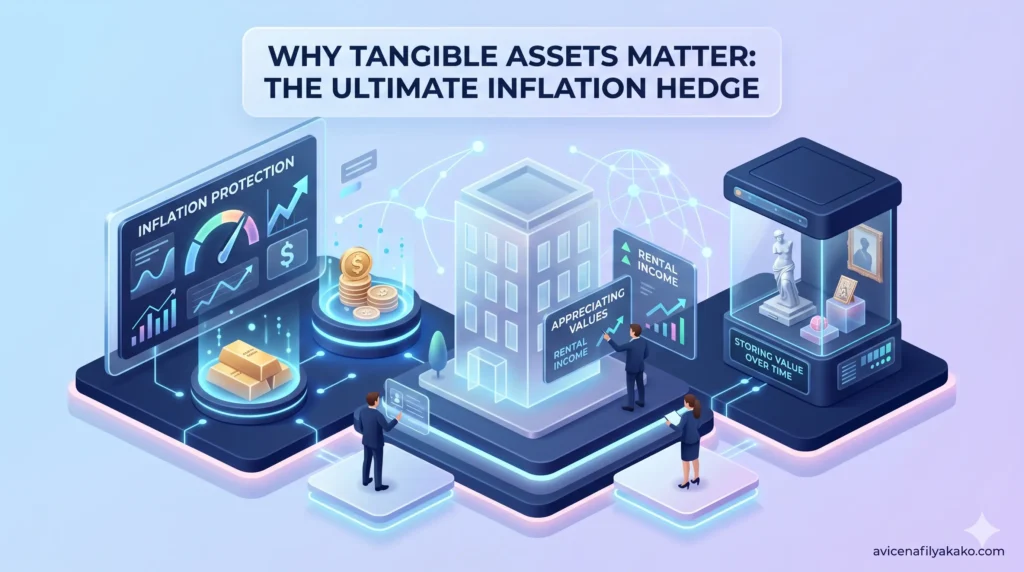
Historically, paper money has a track record of losing value over time. When central banks print more currency, each individual dollar, euro, or dollar buys less. This is where commodities—and specifically gold—enter the equation as a proven inflation hedge.
Unlike paper money, you cannot print more copper, oil, or precious metals at the push of a button. Their scarcity is hardcoded into the earth. As the cost of living climbs, the prices of these raw materials typically rise along with it, effectively acting as an inflation hedge for your capital.
“Gold is money. Everything else is credit.” — J.P. Morgan
When you hold tangible assets, you are converting your wealth from a depreciating paper slip into something with intrinsic, real-world utility. According to insights on the Strategic Role of Commodities in Portfolios, broad commodities offer an excellent structural inflation hedge because they are often the very drivers of price increases in the broader economy.
Understanding Gold Investment: Physical Gold vs. Paper Gold

When you decide to venture into gold investment, you will quickly realize there are two primary paths you can take. You can either buy physical metal or trade paper contracts. Both options serve a distinct purpose depending on your ultimate financial goals.
                  [ Gold Investment Options ]
                             │
            ┌────────────────┴────────────────┐
            ▼                                 ▼
    [ Physical Gold ]                 [ Paper Gold ]
    (Bars, Coins, Bullion)         (ETFs, Futures Market)
1. Physical Gold
This is the traditional route of buying tangible bars, coins, or bullion. You take direct possession of the asset or store it in a secured vault. The beauty of physical gold is that it carries zero counterparty risk. If the financial system experiences a sudden blackout or crisis, your physical wealth remains safely intact in your hands.
2. The Futures Market and ETFs
If you prefer liquidity and ease of trading over physical storage, the paper market might suit you better. Through the futures market and Gold Exchange-Traded Funds (ETFs), you can speculate on or track the spot price without ever handling a heavy bar of metal. This method allows you to enter and exit positions within seconds, making it ideal for tactical asset allocation. To see how these tactical moves fit into a broader, long-term portfolio framework, you can discover how to design robust strategic asset allocation models that balance both risk and growth.
Comparing Asset Classes for Wealth Protection

To build an effective shield for your portfolio, it helps to see how different forms of investment and investing stack up against one another. Let’s look at the core differences between physical precious metals, broad commodities, and traditional cash.
| Asset Class | Liquidity Speed | Volatility Risk | Role as an Inflation Hedge |
|---|---|---|---|
| Physical Gold | Moderate | Low to Moderate | Excellent (Long-term preservation) |
| Broad Commodities | High (via Paper) | High | Strong (Tied to immediate demand) |
| Fiat Cash | Immediate | None (Nominal) | Poor (Guaranteed purchasing loss) |
As data indicates regarding the Role of Gold in Wealth Preservation, precious metals act as a steady anchor during market storms, whereas raw materials like oil or agriculture provide a more dynamic, short-term bounce against sudden price spikes.
How to Build a Resilient Gold and Commodity Strategy
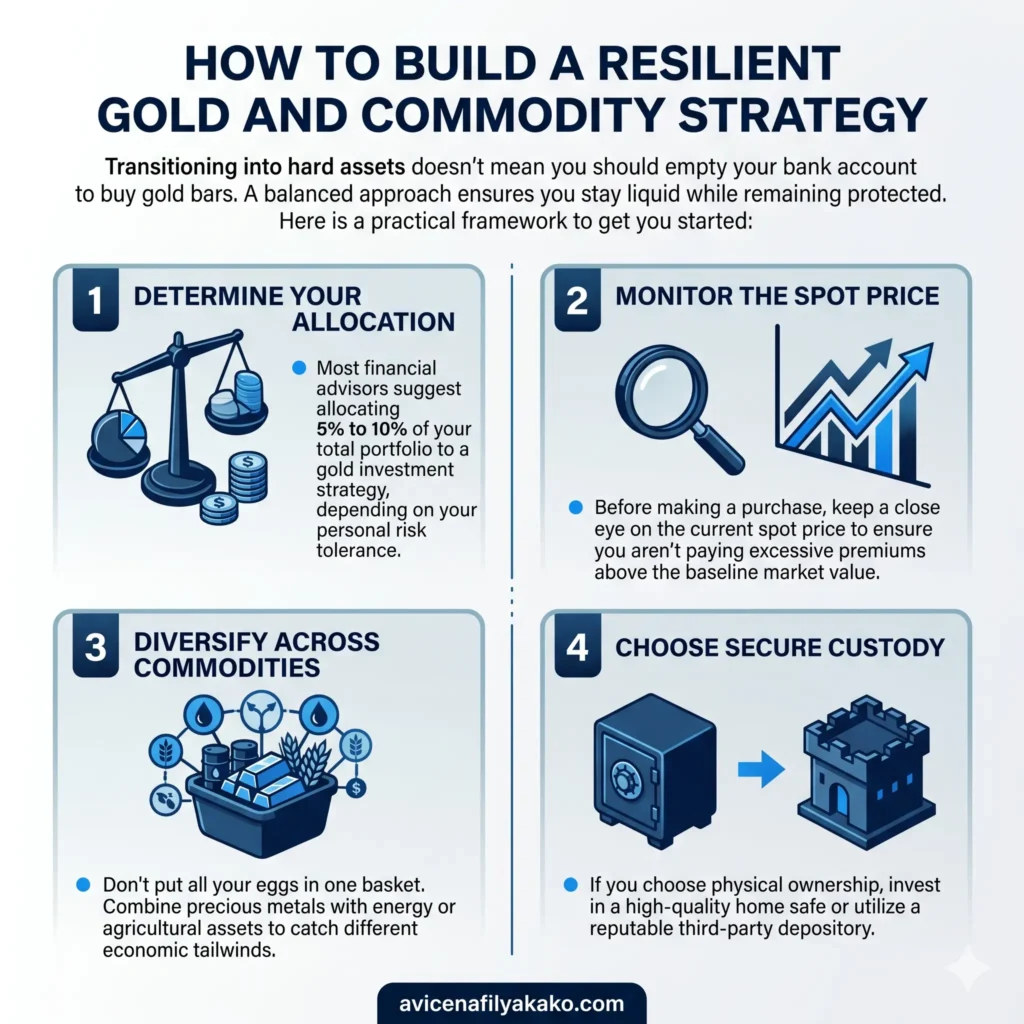
Transitioning into hard assets doesn’t mean you should empty your bank account to buy gold bars. A balanced approach ensures you stay liquid while remaining protected.
Here is a practical framework to get you started:
- Determine Your Allocation: Most financial advisors suggest allocating 5% to 10% of your total portfolio to a gold investment strategy, depending on your personal risk tolerance.
- Monitor the Spot Price: Before making a purchase, keep a close eye on the current spot price to ensure you aren’t paying excessive premiums above the baseline market value.
- Diversify Across Commodities: Don’t put all your eggs in one basket. Combine precious metals with energy or agricultural assets to catch different economic tailwinds.
- Choose Secure Custody: If you choose physical ownership, invest in a high-quality home safe or utilize a reputable third-party depository.
FAQs About Commodities and Wealth Preservation
Can gold completely replace cash in a modern investment portfolio?
No, gold should not completely replace cash because it lacks immediate liquidity for daily transactions and does not pay a regular dividend or interest yield. You should view it as a long-term defensive anchor rather than an operational cash reserve.
How does the spot price of gold differ from the price of futures?
The spot price represents the exact cost for immediate delivery of the physical metal, while the futures price reflects the anticipated market value for a delivery date later in the in the future. The gap between the two accounts for storage costs, interest, and shifting market expectations.
Why are raw commodities considered a volatile investment and investing choice?
Commodities are highly volatile because their prices react instantly to unpredictable real-world events like weather disruptions, geopolitical conflicts, and sudden supply chain bottlenecks. While this volatility can yield high returns, it requires a higher risk tolerance than steady precious metals.
Disclaimer: The information provided in this article is for educational and general informational purposes only and should not be construed as professional advice (such as legal, medical, or financial). While the author strives to provide accurate and up-to-date information, no representations or warranties are made regarding its completeness or reliability. Any action you take based on this information is strictly at your own risk.
This article was authored by Avicena Fily A Kako, a Digital Entrepreneur & SEO Specialist using AI to scale business and finance projects.