
When you think of investing, your mind probably jumps straight to the “Big Two”: stocks and bonds. But there is a quieter, often more lucrative world where you can earn a percentage of every song played on the radio, every barrel of oil pumped from the ground, or every book sold on Amazon. This is the world of royalty investing.
I like to think of royalty investing as owning a private toll booth on a digital or physical highway. You don’t have to build the road or maintain the cars; you simply collect a fee every time someone passes through.
What Exactly is Royalty Investing?
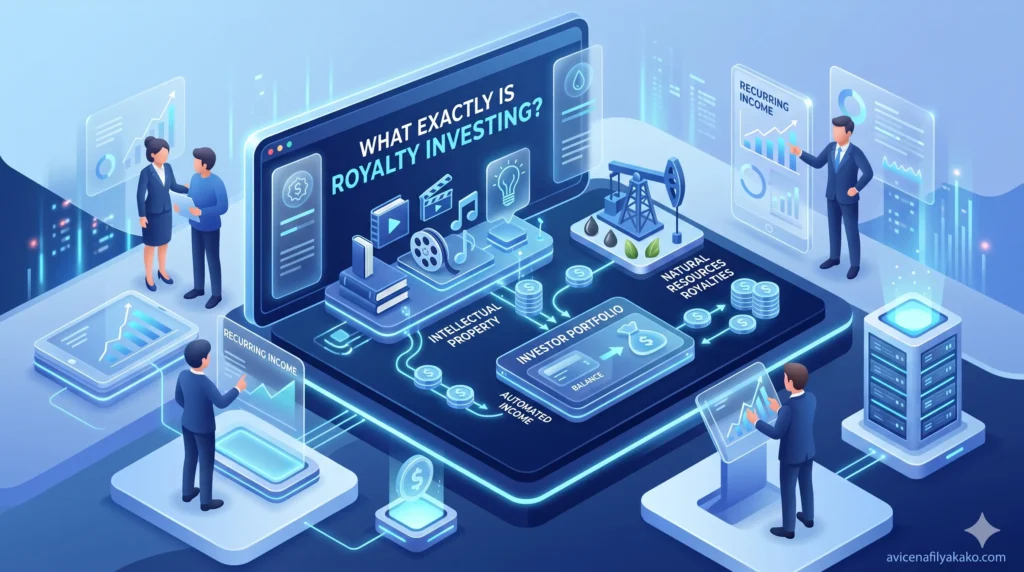
At its core, a royalty is a payment made to an owner for the ongoing use of their assets. In the past, this was a playground reserved for industry insiders and wealthy moguls. Today, platforms like Royalty Exchange have democratized access, allowing you to buy into these cash-flow streams.
When you engage in royalty investing, you are essentially purchasing the right to future residual income. You provide upfront capital to a creator or owner in exchange for a slice of their future earnings. It’s a win-win: the creator gets immediate liquidity, and you get a yield-bearing asset that isn’t tied to the volatility of the S&P 500.
The Power of Intellectual Property
Most royalties stem from intellectual property (IP). This includes music catalogs, trademarks, patents, and even film rights. Unlike a physical building that requires a new roof every twenty years, a hit song from the 1980s can continue to generate revenue with zero maintenance costs.
This ‘hands-off’ advantage is why many investors treat intellectual property as a digital alternative to real estate; you can compare REITs vs. physical real estate to see how royalty streams offer similar passive characteristics without the traditional headaches of property management.
As David Bowie famously proved with his “Bowie Bonds” in 1997, musical catalogs are financial engines. He paved the way for modern investors to treat art as a rigorous financial instrument.
The Primary Types of Royalty Assets

While there are dozens of niche categories, most investors focus on two main pillars: Music and Minerals.
1. Music Royalties
Every time a song is streamed on Spotify, played in a commercial, or performed live, a royalty is triggered. You can invest in “Performance Rights” (radio/live) or “Mechanical Rights” (digital streams/physical sales).
2. Mineral and Energy Rights
This involves owning a portion of the resources extracted from a piece of land. If a company drills for oil or gas on land where you hold mineral rights, they pay you a percentage of the gross production. This is a classic form of royalty investing that has built generational wealth for decades.
3. Corporate and Franchise Royalties
Some companies offer “top-line” royalties, where you earn a percentage of gross sales rather than net profit. This protects you from “creative accounting” that might hide profits at the bottom of a balance sheet.
| Asset Type | Primary Revenue Driver | Risk Level |
|---|---|---|
| Music Rights | Streaming & Licensing | Moderate (Trend Dependent) |
| Mineral Rights | Resource Extraction | High (Commodity Pricing) |
| Trademarks | Brand Licensing | Low to Moderate |
Why Royalty Investing Beats Traditional Fixed Income

In a landscape where bond yields often struggle to keep pace with inflation, royalty investing offers a compelling alternative. These assets are “uncorrelated,” meaning a stock market crash doesn’t necessarily mean people stop listening to their favorite songs or using energy.
Predictable Residual Income
The beauty of these assets is their “long tail.” A classic song or a proven oil well provides residual income that can last for decades. According to BMO Global Asset Management, the institutional interest in royalties is surging because they offer “returns on repeat.”
While these ‘repeat returns’ are impressive, I often suggest that they should complement a core dividend growth investing framework to ensure your portfolio has a healthy mix of alternative yield and established corporate equity.
Protection Against Inflation
Royalties are often tied to top-line revenue. If the price of a streaming subscription goes up or the price of oil rises, your royalty check typically increases as well. This makes royalty investing a natural hedge against a weakening currency.
How to Get Started: A Step-by-Step Guide
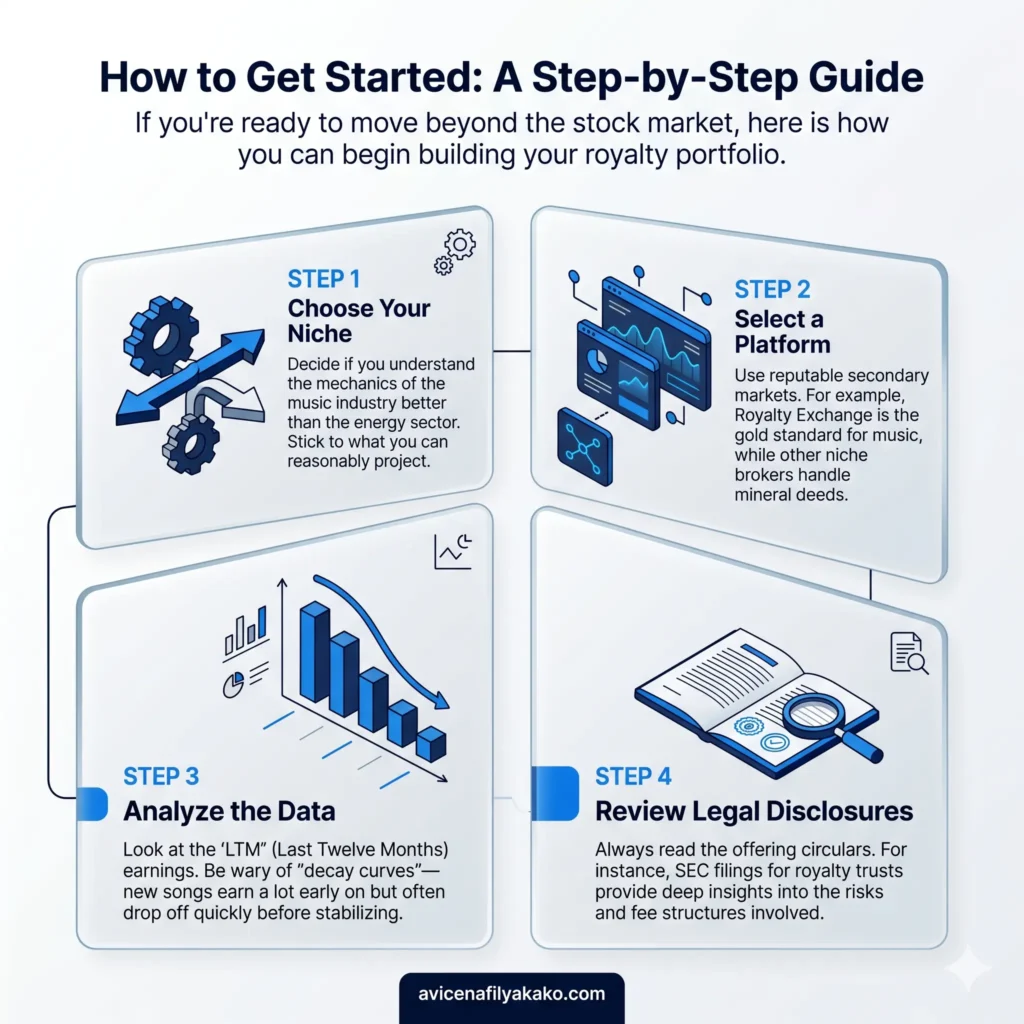
If you’re ready to move beyond the stock market, here is how you can begin building your royalty portfolio.
- Choose Your Niche: Decide if you understand the mechanics of the music industry better than the energy sector. Stick to what you can reasonably project.
- Select a Platform: Use reputable secondary markets. For example, Royalty Exchange is the gold standard for music, while other niche brokers handle mineral deeds.
- Analyze the Data: Look at the “LTM” (Last Twelve Months) earnings. Be wary of “decay curves”—new songs earn a lot early on but often drop off quickly before stabilizing.
- Review Legal Disclosures: Always read the offering circulars. For instance, SEC filings for royalty trusts provide deep insights into the risks and fee structures involved.
Strategic Tips for the Modern Investor
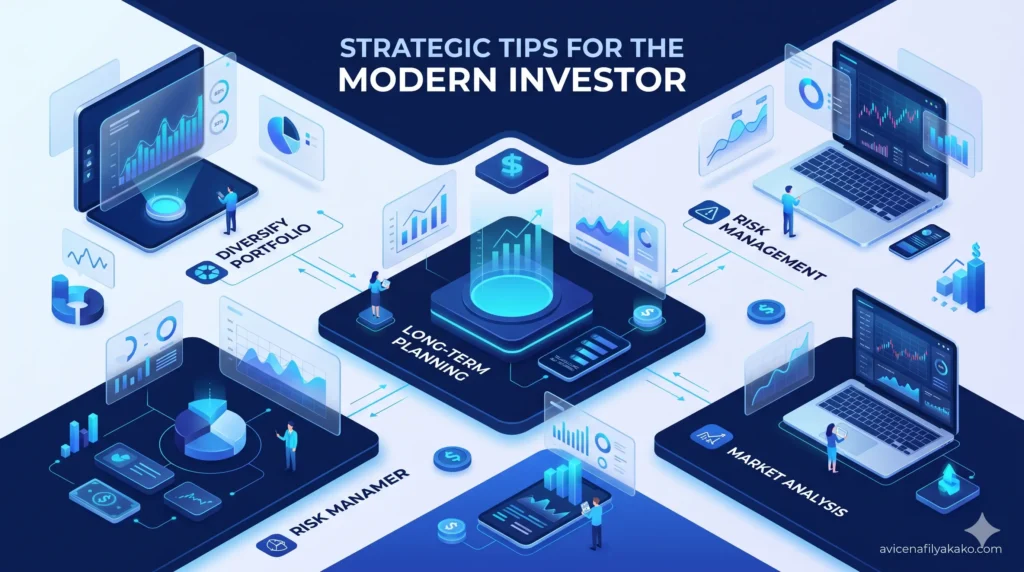
Don’t put all your eggs in one music catalog. Diversification is just as important in royalty investing as it is in stocks. I suggest mixing “Evergreens” (older songs with stable earnings) with “Growth” assets (newer hits with higher upside).
“The rich invest in time, the poor invest in money.” — Warren Buffett
By investing in royalties, you are essentially buying back your time. You are putting your capital into an asset that works 24/7 without requiring your physical presence.
Frequently Asked Questions
Is royalty investing risky for beginners?
Royalty investing carries unique risks, such as technological shifts (like the move from CDs to streaming) or commodity price swings, which can impact the value of your underlying asset. Unlike stocks, these assets can be “illiquid,” meaning they may take longer to sell if you need cash quickly.
How much money do I need to start?
While some private deals require hundreds of thousands of dollars, many modern platforms allow you to start with as little as $1,000 to $5,000 through fractional ownership. This lower barrier to entry has made royalty investing accessible to the average retail investor.
How are royalties taxed?
Royalties are generally treated as ordinary income, but the specific tax treatment depends on whether you own the asset as an individual or through a business entity. In some cases, such as mineral rights, you may be eligible for depletion allowances that can reduce your taxable income.
Disclaimer: The information provided in this article is for educational and general informational purposes only and should not be construed as professional advice (such as legal, medical, or financial). While the author strives to provide accurate and up-to-date information, no representations or warranties are made regarding its completeness or reliability. Any action you take based on this information is strictly at your own risk.
This article was authored by Avicena Fily A Kako, a Digital Entrepreneur & SEO Specialist using AI to scale business and finance projects.