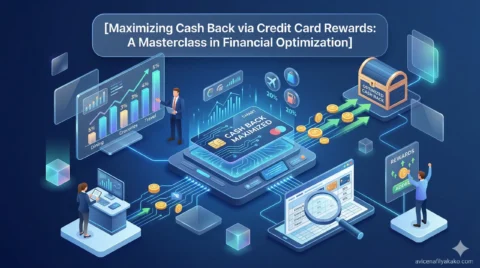
Think of your wallet as a high-performance engine. Most people treat their plastic like basic fuel, but when you understand the mechanics of Credit Card Rewards, you’re essentially adding a turbocharger to your every purchase.
Navigating the world of points and percentages can feel like learning a new language. However, once you grasp the basics, you stop “spending” money and start “investing” your expenses to generate a tax-free return.
Understanding the Ecosystem of Credit Card Rewards
To master the game, you first need to understand that not all “cash back” is created equal. Banks design these programs to incentivize specific behaviors, and your job is to align your organic spending with their highest-paying categories.
The foundation of any solid strategy relies on three pillars:
- Sign-up bonus acquisition for massive upfront value.
- Merchant categories optimization to ensure every dollar earns its maximum potential.
- Point valuation to determine if you should take the cash or pivot to travel.
As personal finance expert Ramit Sethi often says, “Spend extravagantly on the things you love, and cut costs mercilessly on the things you don’t.” Using rewards allows you to do exactly that by subsidizing your lifestyle through smart automation.
Decoding the Power of the Sign-Up Bonus

The fastest way to see a return on your Credit Card Rewards is through the “welcome offer” or sign-up bonus. This is the “low-hanging fruit” of the finance world. Banks are willing to pay you hundreds of dollars in exchange for your loyalty and a specific amount of spending within the first few months.
How to Evaluate a Bonus
Don’t just look at the raw number. Calculate the “Net Value” by subtracting any annual fee from the total bonus amount. If a card offers $500 but costs $95 per year, your Year 1 profit is $405.
Strategy for High-Spend Months
I always recommend timing a new application around large, planned expenses—like a new laptop, a wedding, or home repairs. This ensures you hit the spending requirement without buying things you don’t actually need.
Mastering Merchant Categories for Everyday Gains

The difference between a 1% return and a 5% return might seem small, but over a year, it’s the difference between a free dinner and a free vacation. Modern Credit Card Rewards programs use “Bonus Categories” to reward you for specific types of spending.
Common High-Yield Categories
- Groceries & Dining: Usually the highest recurring expense for most households.
- Gas & Commuting: Essential for those with a daily drive.
- Streaming & Utilities: Often overlooked but easy to “set and forget.”
| Reward Type | Average Return | Best Use Case |
|---|---|---|
| Flat-Rate Cash Back | 1.5% – 2% | General spending (bills, repairs) |
| Tiered Category | 3% – 5% | Targeted spending (groceries, gas) |
| Rotating Category | 5% | Seasonal spending (holiday shopping) |
The Art of Point Valuation: Cash vs. Travel

This is where many people leave money on the table. While “cash back” is straightforward (10,000 points = $100), some Credit Card Rewards programs allow you to transfer points to airline or hotel partners.
When to Take the Cash
If you prefer simplicity and have no immediate travel plans, cash is king. It’s liquid, it doesn’t expire, and it can be used to pay off your balance or be moved into a high-yield savings account.
To further maximize these liquid returns, you can use this CD ladder guide to structure your redeemed cash back into a series of short-term certificates that earn higher interest while maintaining a steady flow of accessible capital.
When to Chase Points
In many premium ecosystems, your point valuation can jump from 1 cent per point to 2 or 3 cents when booked through a travel portal or transferred to a partner. Consumer Financial Protection Bureau (CFPB) Guide on Credit Card Interest Rates
Avoiding the “Interest Trap”
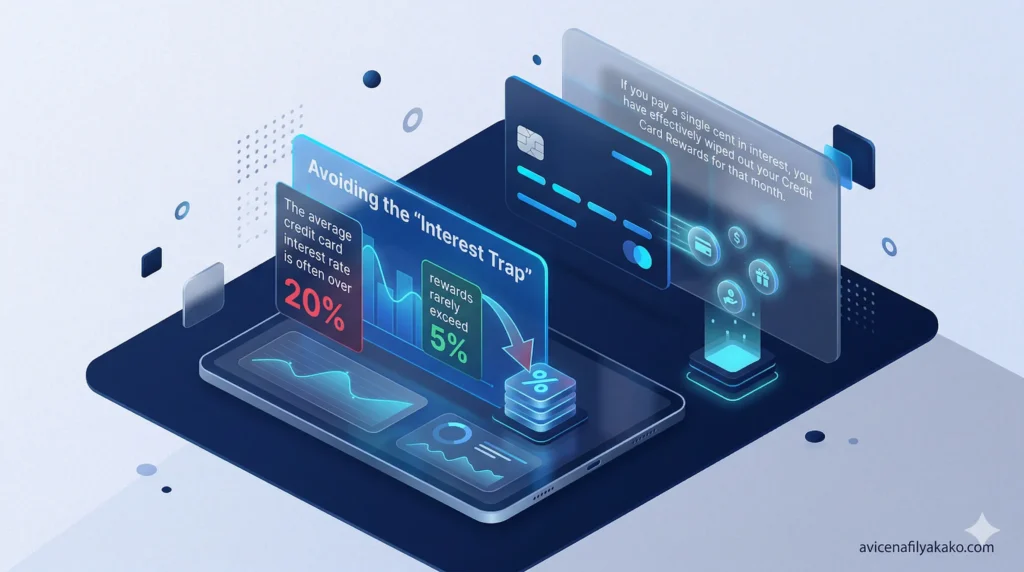
It’s crucial to remember that the house always wins if you carry a balance. The average credit card interest rate is often over 20%, while rewards rarely exceed 5%. If you pay a single cent in interest, you have effectively wiped out your Credit Card Rewards for that month.
This emphasizes the importance of playing ‘defense’ with your capital; just as you avoid high-interest debt here, you should apply a rigorous P2P lending risk management strategy when acting as the lender to ensure your search for high yield doesn’t lead to unnecessary principal loss.
The Golden Rule of Rewards
Treat your credit card like a debit card. If the money isn’t in your bank account right now, don’t put it on the card. Use the bank’s money for 30 days, earn your 2-5% “kickback,” and pay the statement in full before the due date.
Building Your “Optimal Wallet”
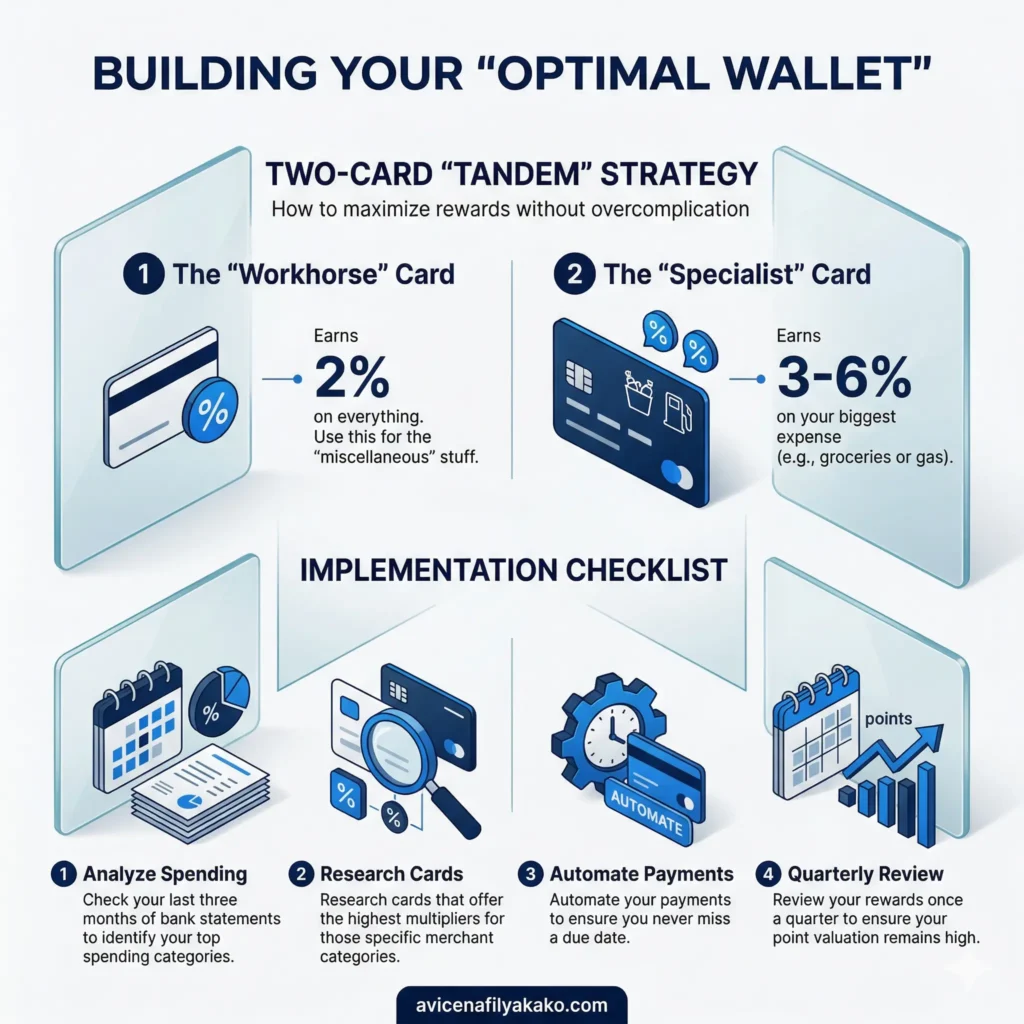
I suggest a two-card “tandem” strategy to maximize your Credit Card Rewards without overcomplicating your life:
- The “Workhorse” Card: A flat-rate card that earns 2% on everything. Use this for the “miscellaneous” stuff.
- The “Specialist” Card: A card that earns 3-6% on your biggest expense (e.g., groceries or gas).
Implementation Checklist
- Check your last three months of bank statements to identify your top spending categories.
- Research cards that offer the highest multipliers for those specific merchant categories.
- Automate your payments to ensure you never miss a due date.
- Review your rewards once a quarter to ensure your point valuation remains high.
Ultimately, optimizing your wallet is only the first step; the most successful digital entrepreneurs take these tax-free ‘kickbacks’ and reinvest them into a dividend growth investing framework to turn temporary rewards into a permanent stream of compounding wealth.
Frequently Asked Questions
Does applying for multiple cards hurt my credit score?
Applying for a new card causes a temporary “hard inquiry” dip of about 5-10 points, but your score typically recovers within a few months as your total available credit increases and your utilization ratio drops.
When is the best time to redeem my cash back?
The best time to redeem is as soon as you hit the minimum threshold, as rewards sitting in your account do not earn interest and are subject to program changes or devaluations.
Are credit card rewards considered taxable income?
No, the IRS generally views Credit Card Rewards and sign-up bonuses as a rebate on a purchase rather than income, making them tax-free for personal use.
Disclaimer: The information provided in this article is for educational and general informational purposes only and should not be construed as professional advice (such as legal, medical, or financial). While the author strives to provide accurate and up-to-date information, no representations or warranties are made regarding its completeness or reliability. Any action you take based on this information is strictly at your own risk.
This article was authored by Avicena Fily A Kako, a Digital Entrepreneur & SEO Specialist using AI to scale business and finance projects.