
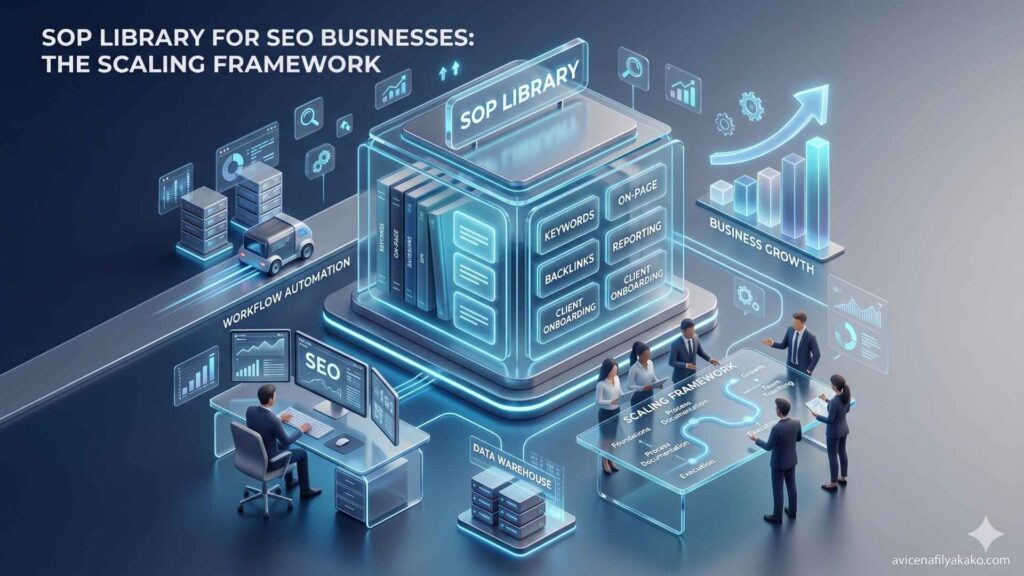
Scaling an SEO business requires removing yourself from daily execution. If your team relies on your constant intervention to make editorial decisions, your agency will stall. The only path to predictable growth is building a centralized SOP Library for SEO Businesses. Without standardized documentation and clear standard operating procedures, your operational efficiency will collapse as you add clients.
Most agency operational blueprints fail because they focus on the wrong metrics. For years, industry veterans argued that rigid keyword placement targets were the foundation of content production. However, my execution data tells a completely different story.
Legacy Model
Keyword Density
- Focus: Arbitrary percentages
- Result: Content bottlenecks
Modern Model
Entity Completeness
- Focus: Natural language processing
- Result: 150% Impression growth
Why Most SEO Documentation Fails to Scale
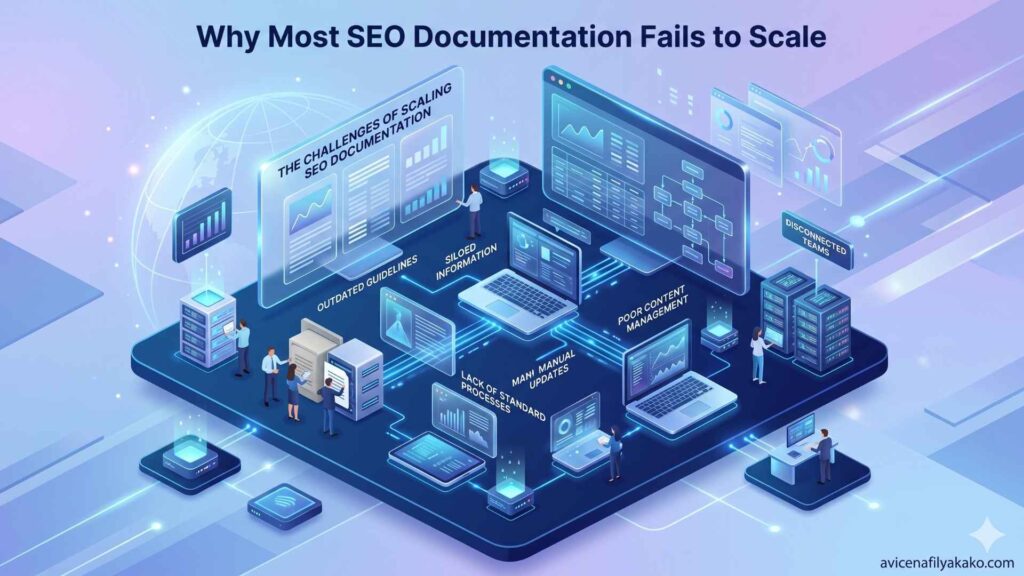
The traditional way agencies build out their internal process documentation is broken. Standard templates usually instruct writers to hit a specific keyword density percentage. This approach creates content bottlenecks, forcing editors to fix awkward, forced phrasing before publishing.
Keyword density is a myth. Search engines use natural language processing algorithms to evaluate entity completeness rather than counting word frequencies. To test this, I have been practicing this strategy for the past 3 months on my personal blog and monitoring its traffic metrics in Google Search Console.
Instead of optimization formulas, I stripped our content SOPs down to two core requirements: fulfilling entity completeness and addressing the user intent directly within the first 100 words of the page.
The results were immediate. Impressions increased by 150% within 90 days without any additional backlinks. We achieved this solely by focusing on improving internal linking structures and establishing deep topical authority through our internal training documents.
The Essential SOPs for a Modern SEO Agency
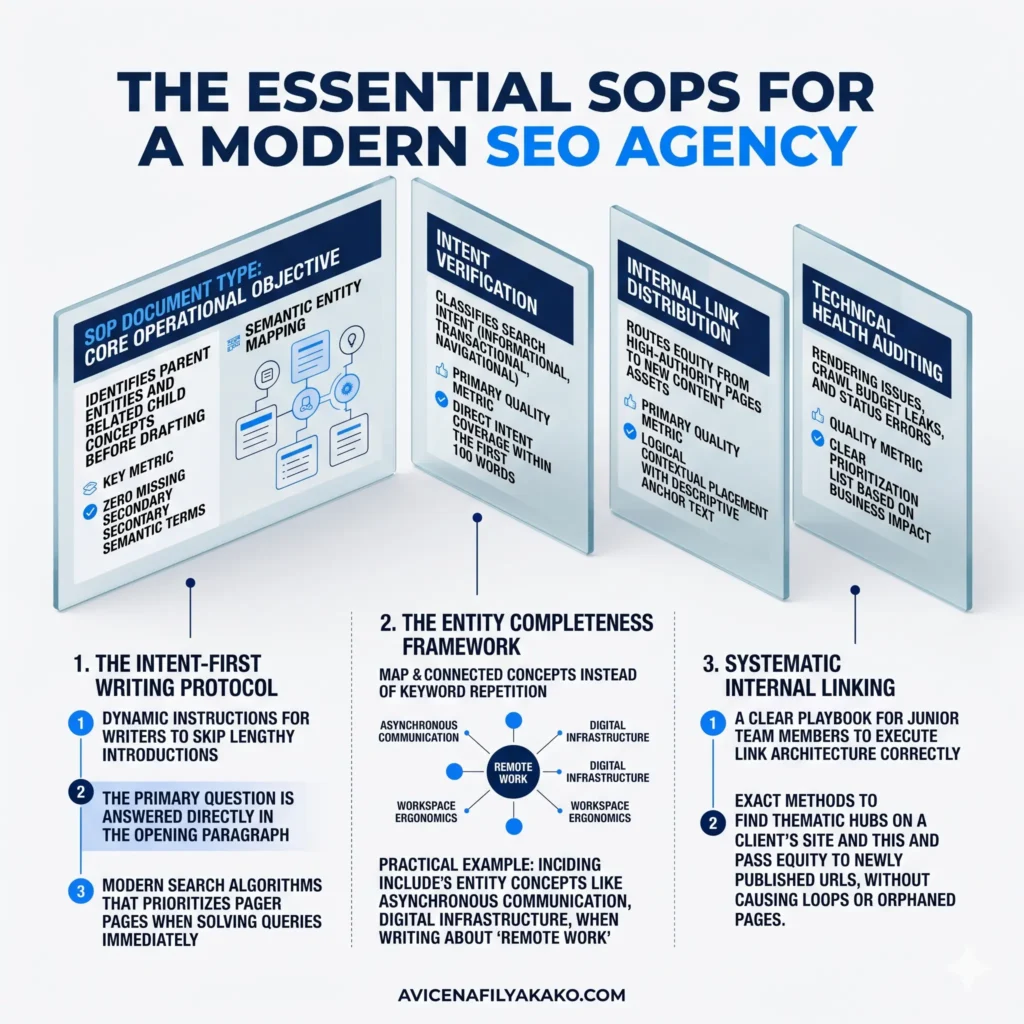
Your library needs to cover the primary operational pillars of search engine optimization. If a process is executed more than once a week, it requires a documented protocol.
| SOP Document Type | Core Operational Objective | Primary Quality Metric |
|---|---|---|
| Semantic Entity Mapping | Identifies parent entities and related child concepts before drafting. | Zero missing secondary semantic terms. |
| Intent Verification | Classifies search intent (informational, transactional, navigational). | Direct intent coverage within the first 100 words. |
| Internal Link Distribution | Routes equity from high-authority pages to new content assets. | Logical contextual placement with descriptive anchor text. |
| Technical Health Auditing | Identifies rendering issues, crawl budget leaks, and status errors. | Clear prioritization list based on business impact. |
1. The Intent-First Writing Protocol
Your execution guides must train writers to skip lengthy introductions. Modern search algorithms prioritize pages that solve the searcher’s query immediately. Your writing SOP should mandate that the primary question is answered directly in the opening paragraph.
2. The Entity Completeness Framework
Instead of giving your team a list of keywords to repeat, provide them with a map of connected concepts. If you are writing about “remote work,” your documentation should require the inclusion of entity concepts like “asynchronous communication,” “digital infrastructure,” and “workspace ergonomics.”
3. Systematic Internal Linking
A core component of scaling an agency is ensuring your junior team members can execute link architecture correctly. Your internal linking playbook must define exactly how to find thematic hubs on a client’s site and how to pass equity to newly published URLs without causing loops or orphaned pages. Once these internal link architectures pass equity to your new pages, you can further streamline your client communications by learning how to set up automated reporting for SEO clients to showcase these performance wins effortlessly.
Transitioning from Operator to Strategist

Building these assets takes time, but it changes your business model. When your execution rules are codified, onboarding new team members takes days instead of weeks. You stop micro-managing word choices and start managing the system itself. To ensure your staff executes these systems effectively without your daily intervention, you should also establish clear benchmarks by implementing remote team KPIs for operational efficiency to measure individual accountability.
Frequently Asked Questions
What is an SOP library for an SEO business?
An SOP library for an SEO business is a centralized collection of step-by-step instructions that guides an agency’s team through executing technical, creative, and analytical tasks consistently. It serves as the single source of truth to ensure all deliverables meet quality standards without direct founder supervision.
How do you build standard operating procedures for scaling content production?
You build standard operating procedures for scaling content production by documenting your exact workflow from keyword research to final proofreading, then stripping away non-essential tasks. The resulting documents should allow a trained writer to execute the task independently with minimal editorial oversight.
Why should SEO documentation focus on entities instead of keywords?
SEO documentation should focus on entities because search systems understand relationships between concepts rather than merely matching strings of text. Documenting semantic requirements ensures your content achieves topical completeness, which leads to sustainable search visibility.
Disclaimer: The information provided in this article is for educational and general informational purposes only and should not be construed as professional advice (such as legal, medical, or financial). While the author strives to provide accurate and up-to-date information, no representations or warranties are made regarding its completeness or reliability. Any action you take based on this information is strictly at your own risk.